

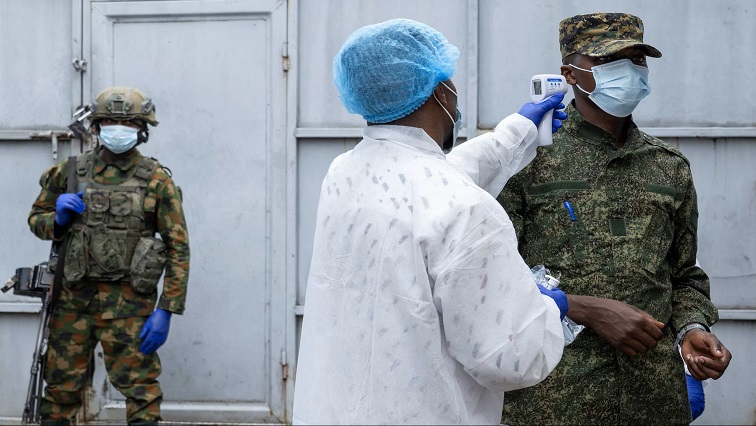
More than 130 days into the Ebola Bundibugyo outbreak, cases recorded over the latest 21-day period fell by about 26% in Ituri and 15% in Haut-Uele.
North Kivu, however, recorded a 73% increase over the same period. The virus has been confirmed in seven provinces. “While cases and deaths are declining in some provinces, they continue to rise in others,” WHO Regional Emergency Director for Africa Dr Marie Roseline Belizaire said.
“Those patterns show the outbreak is still not under control and remains spread across a wide geographic area.”
About one in three new infections is identified only after a person has died outside an Ebola treatment centre. “One of our greatest concerns is that too many people are still dying before reaching treatment,” Belizaire said.
“These are lives that could potentially have been saved through earlier detection and timely access to care.”
Deaths in communities also increase transmission risks among relatives, caregivers and people involved in traditional burial practices.
Children under five face the highest fatality rate at more than 60%, compared with about 40% among adults.
WHO Medical Officer Dr Catherine Smallwood said infections were more difficult to identify in young children because symptoms could be unclear and children might struggle to communicate how they felt. “We must do more to identify sick children earlier and ensure that they receive appropriate treatment without delay. Early detection saves lives,” Belizaire said.
Tracing of contacts linked to infected people has improved to almost 88%. However, many new infections still have no known epidemiological connection. “Closing the surveillance gap is essential if we are to detect cases earlier, trace their contacts and interrupt every chain of transmission,” Belizaire said.
The response now includes nearly 1 400 treatment and isolation beds across 49 Ebola treatment centres. Another 25 laboratories can process up to 2 500 tests daily.
However, shortages of healthcare workers remain a major obstacle, particularly in remote communities.
“Our response is no longer simply about scaling up everywhere,” Belizaire said. “It is about directing teams, expertise and resources to the areas where transmission is greatest and where the risks are high.”
Smallwood called for services to shift from Beni, Butembo and Katwa towards affected villages. “We really need to prioritise decentralising the response to where the cases are, into the villages and local areas,” Smallwood said.
–UN/ChannelAfrica–


