


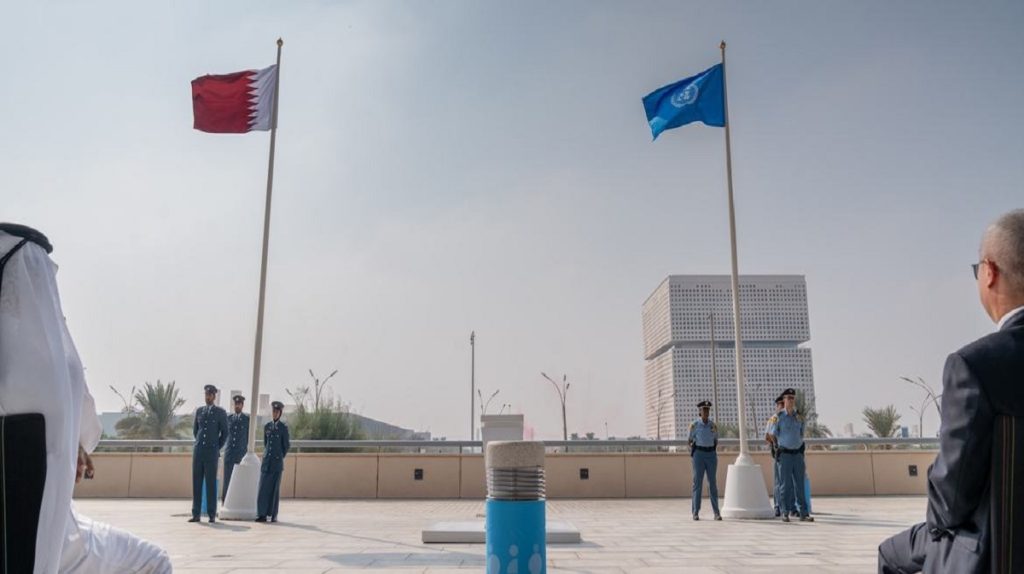
Inside the vast Qatar National Convention Centre, delegations, students, civil society groups and policymakers gathered for what organisers described as a “defining moment” for global social policy. Nearly 14 000 participants are registered for the summit, which aims to shape a people-centred vision for social development over the next decade.
A high-level event titled Education as the Foundation of the New Social Contract set the tone for the day. Her Highness Sheikha Moza bint Nasser, delivering the keynote address, urged world leaders to renew their commitment to education as the cornerstone of justice and opportunity.
“Education is not a luxury, nor a favour to be granted. It is a right, and an existential matter for the future of nations,” she said, citing the 272 million children currently out of school, many due to conflict.
United Nations (UN) Secretary-General António Guterres echoed her message, calling education the “best poverty-fighting tool we have”. He warned, however, that inequalities, chronic underinvestment and teacher shortages are undermining progress. “We must repair the cracks in this vital foundation,” he said, urging governments to view education not as a cost but as a strategic investment.
Speaking later at a press conference, Guterres said rebuilding education systems would be critical in crisis contexts such as Gaza and Sudan. “Education must be a central pillar of any project of reconstruction in Gaza,” he added.
A presidential dialogue featuring the leaders of Kenya, Albania, and Palau followed, highlighting diverse perspectives on education as a driver of development.
President William Ruto of Kenya called for aligning education with digital and labour market needs, while Albania’s President Bajram Begaj reaffirmed education as a universal right. Palau’s President Surangel Whipps stressed the importance of access in remote and island communities.
Across the summit, sessions focused on inclusive solutions, from expanding social protection to redefining poverty. Deputy UN High Commissioner for Human Rights Nada Al-Nashif reminded participants that “social protection is not charity, but a human right,” urging investment in informal workers and financial reforms to safeguard public spending.
Meanwhile, the UN Development Programme unveiled a new policy brief proposing “prosperity floors”, ensuring not just escape from poverty, but resilience against future shocks. Acting Administrator Haoliang Xu said, “With decisive, integrated action, we can break the cycle of vulnerability and deliver lasting prosperity.”
–UN/ChannelAfrica–


