


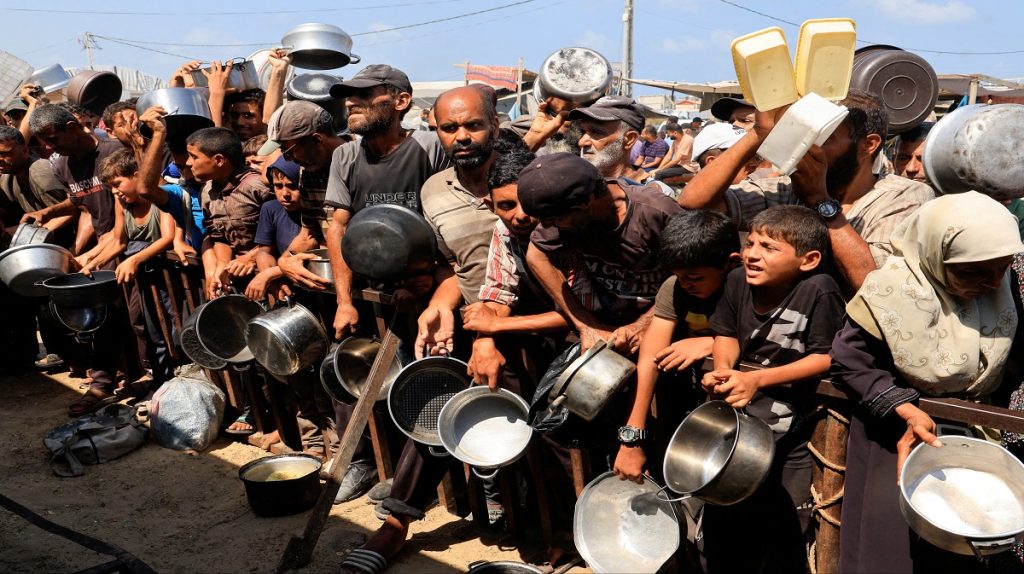
This is according to the United Nations (UN) World Food Programme (WFP).
In its 2026 Global Outlook, WFP warns that by 2026, as many as 318 million people will face crisis levels of hunger or worse, more than double the number recorded in 2019. The agency says that despite escalating need, international support for the world’s hungriest communities remains “slow, fragmented and underfunded”.
UN Deputy Secretary-General Amina Mohammed said the world’s poorest continue to bear the heaviest burden of global conflict and political division.
“The poorest pay the ultimate price. When the elephants fight, it is the grass that suffers,” she said, quoting an African proverb to underline how ordinary people in conflict zones, from Sudan and Gaza to Haiti, Yemen, the Sahel and the Democratic Republic of Congo, are suffering disproportionately.
WFP Executive Director Cindy McCain emphasised that the agency remains a vital lifeline for people affected by conflict, climate shocks and displacement. “WFP provides a critical lifeline to people on the frontlines of conflicts and weather disasters, as well as those forced to leave their homes,” she said.
The organisation plans to reach 110 million vulnerable people in 2026, at an estimated cost of $13 billion. Assistance will include emergency food, nutrition support, resilience programmes and technical help to strengthen national systems.
McCain stressed that simultaneous famines in Gaza and parts of Sudan highlight the severity of today’s crises.
“This is completely unacceptable in the twenty-first century,” she said.
Amina Mohammed added that ending hunger requires investment in climate adaptation, the promotion of peace, stronger local markets and ensuring that women and young people play a central role in decision-making.
–ChannelAfrica–


