


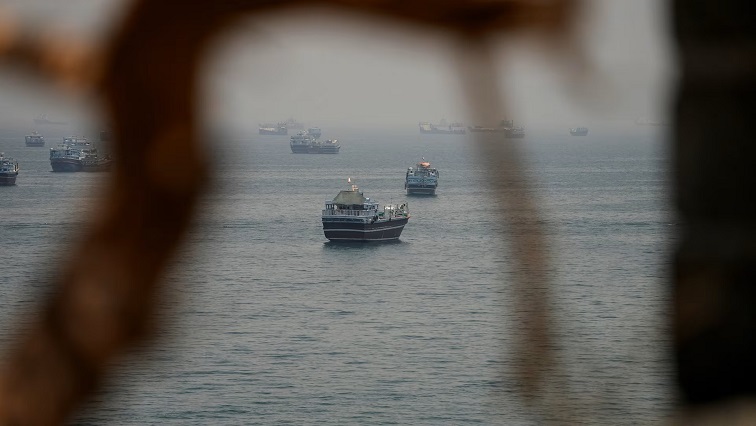
The International Maritime Organisation (IMO) announced that more than 11 000 seafarers will be evacuated following months of disruption linked to the Middle East conflict. The operation comes after a memorandum of understanding between the United States (US) and Iran created conditions for improved safety in the strategic waterway.
IMO Secretary-General Arsenio Dominguez said the agency had secured the necessary assurances to proceed. The evacuation will be coordinated with Iran, Oman, the US and other maritime partners.
UN Spokesperson Stéphane Dujarric said the initiative would help ease the humanitarian toll on seafarers who have faced prolonged uncertainty and restricted movement. “This represents a significant step toward alleviating the humanitarian impact on thousands of seafarers,” Dujarric said.
Meanwhile, conditions in Gaza remain dire, with UN agencies reporting continued civilian casualties due to ongoing hostilities. More than 80% of the population is now displaced, many living in overcrowded shelters or temporary camps.
In a tragic incident, a 17-year-old girl and UN Children’s Fund Youth Advocate was killed while on her way to sit for examinations, highlighting the risks faced by children.
Assessments across nearly 1 600 displacement sites show widespread deprivation. Hundreds of thousands lack access to clean drinking water, while many shelters are severely overcrowded, with some hosting more than eight people.
Sanitation conditions are also deteriorating, with widespread reports of rodents, open sewage and accumulated waste. Fire risks and unexploded ordnance in displacement areas further compound safety concerns.
Fragile calm in Lebanon
In Lebanon, the UN said a recently announced ceasefire between Israel and Hezbollah appears to be “largely holding,” although violations persist. Peacekeepers have observed ongoing military activity, including drone flights and ground operations.
At the same time, the scale of destruction in southern Lebanon is becoming clearer. A UN assessment found more than 11 000 residential buildings destroyed and another 2 200 damaged. “For many families, there is simply no home to return to,” Dujarric said.
–UN/ChannelAfrica–


