
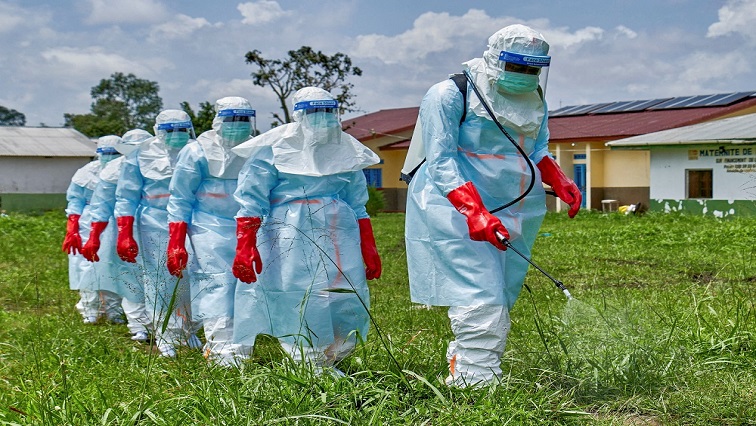
World Health Organisation (WHO) Director-General Dr Tedros Adhanom Ghebreyesus said agency employees and other responders had been forced to shelter “for their lives” at the facility in Ituri province.
The WHO was working with partners to evacuate the trapped teams safely.
Tedros called for the personnel to receive immediate safe passage and for the hospital, patients and healthcare workers to be protected.
The incident occurred near the area where the Bundibugyo virus disease outbreak was first detected.
Ituri remains the epicentre, accounting for more than two-thirds of confirmed infections.
The outbreak had reached 11 762 confirmed cases and 5 775 deaths across 68 health zones in eight provinces by November 20.
Ituri had recorded more than 8 000 infections and 3 791 deaths, representing a case-fatality rate of 47%.
The province also accounted for nearly 60% of newly reported infections. Twenty-three of the latest 39 confirmed cases were recorded in Ituri.
The WHO said worsening insecurity remained one of the greatest obstacles to containing the virus because attacks on civilians and health personnel were disrupting surveillance, contact tracing and access to treatment.
The organisation has verified more than 87 attacks against healthcare in the DRC since January 1.
United Nations Senior Ebola Response Coordinator Julien Harneis said armed violence had recently killed more people than the virus in affected areas.
“The violence in tens of villages all across the south of Ituri and North Kivu goes unnoticed,” Harneis said.
“People are scared. People are furious at the lack of action on this.”
Allied Democratic Forces attacks and abuses against civilians have continued in eastern DRC for more than two decades.
“Following up contact tracing in areas where ADF is operating is a very hazardous idea,” Harneis said.
The WHO said the outbreak continued spreading more than six months after being declared.
A high share of deaths continued occurring in communities and outside designated treatment centres, particularly among young children.
The organisation said the pattern demonstrated continuing difficulties with early detection and access to treatment.
–UN/ChannelAfrica–