


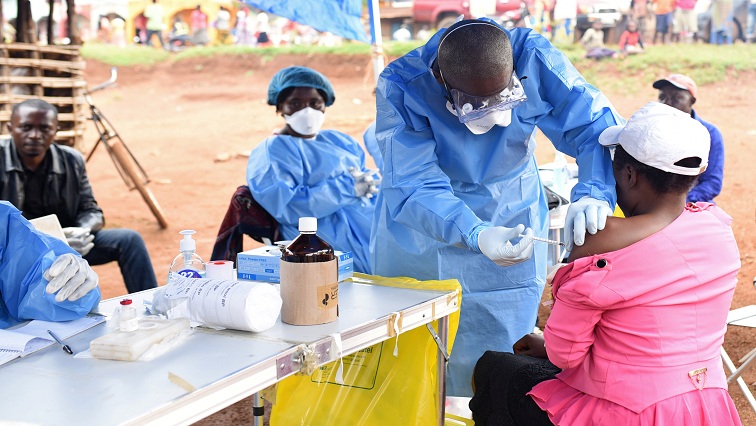
The centre served Kigonze displacement camp, which had sheltered about 19 000 people before thousands fled following reports of gunfire, intimidation and a military search operation.
United Nations Senior Ebola Response Official in the DRC Julien Harneis said the loss would reduce treatment capacity and deny patients essential care. “It’s been a huge struggle to create Ebola transit centres and Ebola treatment centres,” Harneis said.
“When we lose a centre, that means we lose capacity, we lose investment, and we have to start again. Above all, it means that people do not get access to the care that they really need.”
More than 3 000 people also fled Rhoe displacement camp in Djugu territory after fighting intensified on September 27.
At least four people were reportedly killed and seven injured, while several homes were burned in Blukwa. Women and children accounted for most of those displaced.
Conflict has restricted humanitarian access to the Fataki, Drodro and Lita health zones, delayed laboratory samples travelling from Fataki to Bunia and disrupted patients’ transfers.
Some humanitarian organisations have suspended operations in affected areas.
In neighbouring North Kivu, two Ebola responders were reportedly killed in Lubero on September 27 and September 28. Fighting in Masisi has displaced more than 24 000 people since mid-September.
Ebola has spread across seven provinces since the emergency was declared in May. More than 8 000 infections and 4 000 deaths have been confirmed.
Ituri remains the outbreak’s epicentre, with most cases concentrated around Bunia and Mongbwalu. “Where transmission remains intense, we need to increase capacity to halt the pace of infections,” the World Health Organisation (WHO) said.
“In emerging hotspots, we need to intervene quickly to stop the virus from taking hold.”
WHO is supporting surveillance, case management, community engagement and safe burials.
Treatment capacity is being expanded to more than 1 800 beds across 54 facilities in 34 health zones. However, WHO said more than 1 400 additional health professionals were required.
“Increasing capacity allows us to admit more patients under better conditions and reduce delays,” DRC Health Ministry Official Dr Stéphane Mutombo said.
“Rapid isolation and treatment of cases is essential.”
–UN/ChannelAfrica–


