


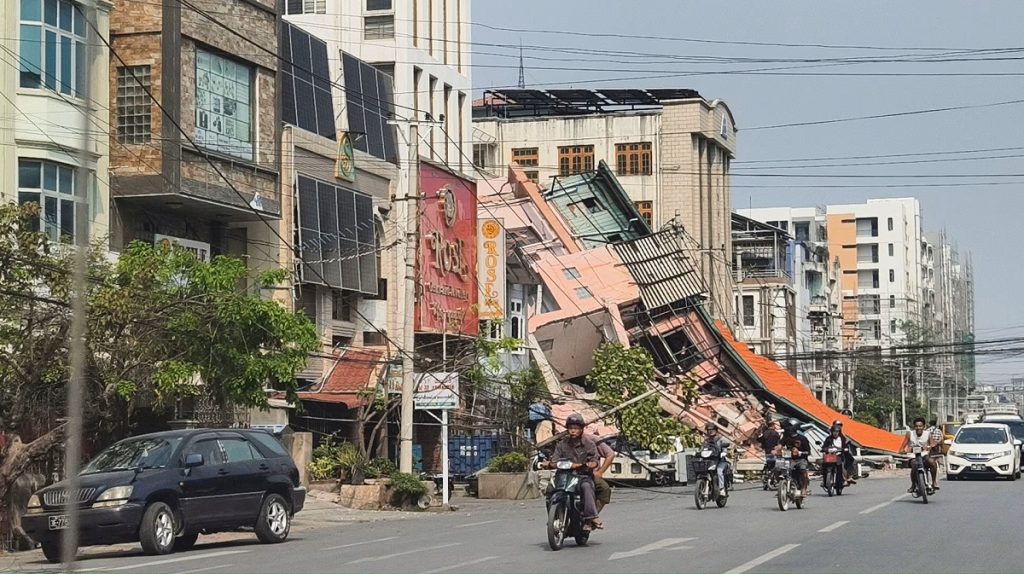
In a statement marking the anniversary on Friday, UN Secretary‑General António Guterres said the people of Myanmar continue to endure “widespread violations of international human rights law and international humanitarian law,” as the cycle of impunity persists.
“The suffering of the people of Myanmar has deepened,” UN Deputy Spokesperson Farhan Haq said, citing intensifying military airstrikes on civilians, acute food insecurity and nearly 5.2 million people now displaced both inside Myanmar and across its borders.
Guterres remains “deeply concerned by the rapidly deteriorating situation,” warning of grave regional consequences, including rising transnational crime, economic instability and soaring humanitarian needs.
The grim anniversary coincides with the conclusion of a three‑phase election orchestrated by the military authorities. UN officials say the process has further polarised society and intensified violence, rather than providing any credible political path forward.
UN High Commissioner for Human Rights Volker Türk said the vote “failed to respect the fundamental human rights” of Myanmar’s citizens and had “served only to exacerbate violence and societal polarisation.”
The election was held in only 263 out of 330 townships, largely limited to urban areas under military control. Conflict‑affected regions, displaced populations and ethnic minorities, including the Rohingya, were effectively excluded.
The main opposition party, the National League for Democracy, which won the 2020 election by a landslide, was barred from participating in the election. Dozens of other anti‑military parties were also banned, and many of their leaders remain imprisoned.
The voting period, from December 2025 to January 2026, was reportedly marred by widespread violence. Open‑source monitoring recorded 408 military airstrikes during the election period, killing at least 170 civilians.
One of the deadliest incidents occurred on 22 January, when a military airstrike on a populated area in Bhamo Township, Kachin State, reportedly killed up to 50 civilians, with no combatants present.
The military also intensified repression, arresting 324 men and 80 women under a unilateral “election protection law”, including for minor online activity. In one case, a man was handed a 49‑year prison sentence for posting anti‑election content.
Political repression is unfolding alongside a rapidly worsening humanitarian emergency:
- One quarter of Myanmar’s population faces high levels of acute food insecurity.
- More than one third urgently need humanitarian assistance.
- Aid access is routinely blocked, including in Rakhine State, where starving communities have been cut off.
Myanmar’s economy has collapsed, losing an estimated US$100 billion since the 2021 coup. GDP is not expected to return to pre‑pandemic levels for years.
“The military’s usurpation of power has also been accompanied by disastrous mismanagement of the country’s economy,” Türk said.
As violence escalates and the humanitarian crisis deepens, the UN is urging renewed international pressure on Myanmar’s military authorities and stronger support for regional diplomacy aimed at restoring a path toward civilian rule.
–UN/ChannelAfrica–


