
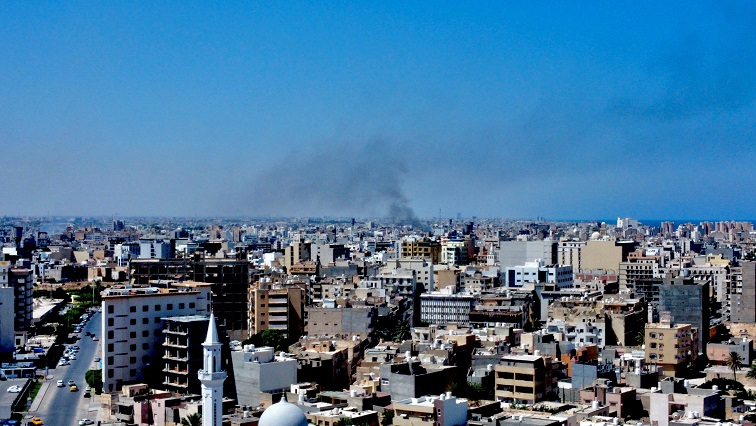
Gaddafi ruled Libya for more than four decades before being overthrown during the 2011 Arab Spring uprising and killed by rebel forces in Sirte on October 20.
Afro-Middle East Centre Executive Director Na’eem Jeenah said the country’s security and governance structures remained fragmented. “You have more than one government, at least two governments, and scores of militias,” Jeenah said.
“Even in the capital, Tripoli, different parts of the city are controlled by different militias.”
Jeenah said Libya had struggled to establish unified government because Gaddafi’s removal dismantled a repressive state without producing an agreed political transition.
Gaddafi had deliberately weakened the military to prevent competing centres of power while using state institutions to suppress political opposition.
Following Gaddafi’s removal, armed groups, regional factions and political movements competed to fill the resulting power vacuum. “There is little trust between different political actors and different militias,” Jeenah said.
Foreign intervention had further prolonged instability, with countries supporting competing governments and armed groups.
North Atlantic Treaty Organisation members participated in the 2011 military intervention, while Türkiye, Egypt, Saudi Arabia and the UAE subsequently backed different Libyan factions.
Russia also deployed Wagner Group fighters in support of forces aligned with eastern-based Military Commander Khalifa Haftar.
Jeenah said foreign governments had sometimes changed alliances, making negotiations and political reconciliation more difficult.
The looting of Libyan weapons depots following the uprising also allowed arms to spread across the Sahel, contributing to insecurity beyond Libya’s borders.
Libya’s experience demonstrated the risks of removing a long-serving leader without an inclusive and credible transition plan, Jeenah said. “There must be a plan in which different actors are able to work together to effect that political transition,” Jeenah said.
Rebuilding Libya would require foreign powers to stop supporting armed groups, militias to participate in a political settlement and national institutions to be restored. “The first thing is the removal of foreign support for armed militias,” Jeenah said.
“Foreign assistance towards negotiations and a democratic process could be useful, but throwing weapons and fighters into the country is helping to destabilise Libya.”
–ChannelAfrica–





