


Clashes have intensified between government forces and fighters loyal to the former regional President, who was removed from office in March.
The latest hostilities reportedly followed the arrival of thousands of local fighters in Baidoa, the largest city in Somalia’s South West State. “Children are once again bearing the heaviest burden of violence,” the United Nations (UN) Children’s Fund (UNICEF) said.
“UNICEF calls on all parties to protect children from harm, ensure the protection of schools and health facilities, and allow safe and unhindered humanitarian access.”
The violence comes as recurring conflict, displacement, global trade disruptions, drought and flooding fuel one of the world’s largest malnutrition crises.
UN agencies estimate that 2 million children across Somalia are acutely or severely malnourished.
In Baidoa, about 26 000 people face catastrophic food insecurity, the highest level on the hunger scale, placing communities at risk of famine.
Strengthening El Niño conditions could worsen the crisis by intensifying rainfall during the October-December season.
One resident, Hawo, fled Baidoa for Mogadishu after a mortar struck the family home and killed Hawo’s father. Hawo’s brother was later killed during fighting.
“Even with my aunt’s support, I have been struggling, but sometimes it is really bad,” Hawo said. “Some days we eat just once a day.”
Hawo sought treatment after daughter Farhiya became listless, lost interest in food and began losing weight. However, the Weido clinic was turning away women and children because of insufficient resources. “I hope I can get the support I need for my child to recover,” Hawo said.
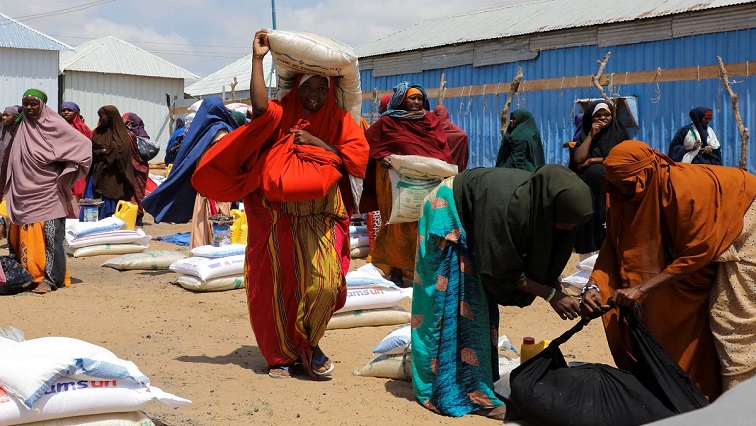
Humanitarian funding cuts have sharply reduced food assistance across Somalia.
The World Food Programme (WFP) previously supported more than 4 million people each month but can currently reach just over 670 000. “In 2022, when Somalia was experiencing its longest drought in 40 years, timely and generous funding helped scale up assistance to avert famine,” WFP Country Director in Somalia Hameed Nuru said.
“Today, severe funding shortfalls mean we are only reaching a fraction of those in need, forcing us to make painful choices about who receives assistance and who does not.”
–UN/ChannelAfrica–


