


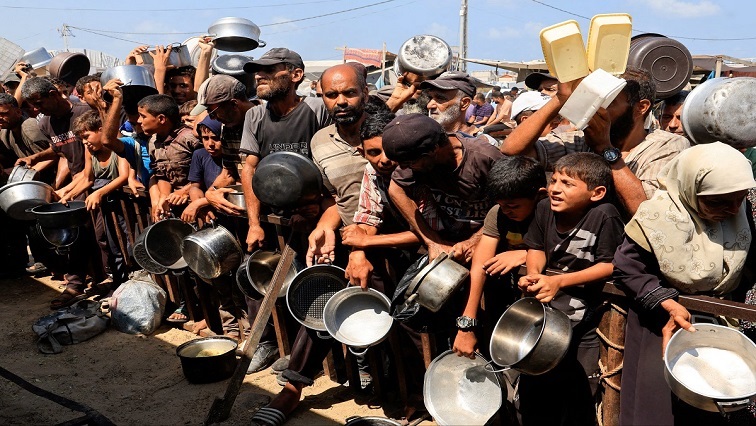
WFP Country Director for Palestine Shaun Hughes said about 200 000 people would lose access to critical support.
According to Hughes, intensified settler violence, Israeli military operations, movement restrictions, demolitions and displacement have damaged livelihoods and increased food insecurity.
An economic crisis has placed further pressure on households, with unemployment more than doubling and more than a third of the population struggling to meet basic needs.
Nearly 1 million people in the West Bank, representing more than a quarter of the population, are food insecure. The figure stood at 11% two years ago. “Food may be available in the markets, but people simply cannot afford it,” Hughes said.
WFP previously provided cash transfers of about $20 per person each month. Hughes described the payments as an important source of support for households unable to access land, employment or stable income.
Funding constraints have also affected assistance in the Gaza Strip, where WFP reduced cash support for 75 000 families in July.
Two-thirds of Gaza’s population still faces critical or emergency hunger levels. WFP warned that up to 90% of the population could experience high acute food insecurity by year-end without continued humanitarian food assistance.
WFP requires $386 million to prevent further reductions across Gaza and the West Bank over the next six months.
The World Health Organisation (WHO) also warned of a growing public health threat in Gaza, including serious concerns over water quality and availability.
WHO Representative in the Occupied Palestinian Territory Dr Renee van de Werdt said microbiological contamination had almost tripled since January because of limited testing capacity.
Cases of acute watery diarrhoea increased from about 30 000 in March to more than 58 000 in August. Winter could worsen sanitation conditions, including sewage flows through densely populated areas.
More than 6 600 people require long-term care after limb amputations, while no prosthetic limbs have entered Gaza since May 2024. By July, only 12% of people who had lost limbs since October 2023 had received prosthetics. “Unfortunately, we know what’s coming, but we still have time to prevent a public health disaster within this disaster,” Van de Werdt said.
–UN/ChannelAfrica–


