

Palestinian President Mahmoud Abbas and Israeli Prime Minister Benjamin Netanyahu presented sharply different accounts of the conflict, reflecting continuing divisions over Gaza and the occupied West Bank.
Abbas addressed the Assembly through a pre-recorded video after the Palestinian delegation was denied visas.
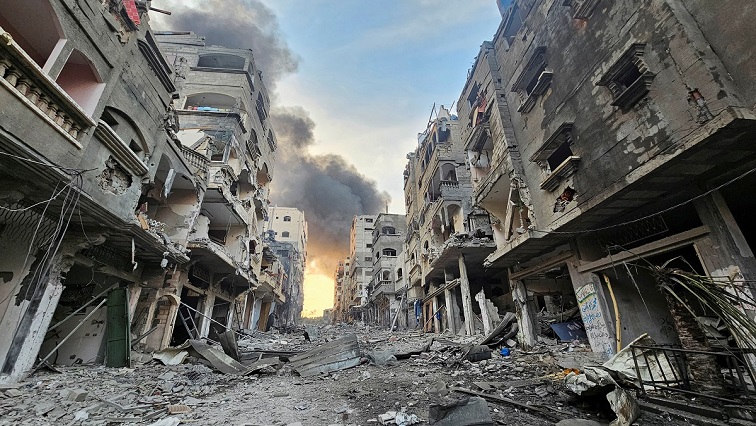
Abbas described the conflict as a “genocidal war” and warned that it threatened “the very existence of the Palestinian people”.
Abbas called for Gaza and the occupied West Bank to be reunited and warned against “another Nakba”, referring to the mass displacement of Palestinians during the 1948 Arab-Israeli war.
Netanyahu said Israel had been compelled to respond following the Hamas-led attacks of October 7, 2023.
Netanyahu defended Israeli settlers in the occupied West Bank and accused international media and social media platforms of overlooking Palestinian attacks.
Netanyahu also defended Israel’s attacks on Iranian nuclear facilities, arguing that the operations were necessary for national survival.
Leaders from other countries said the effects of the wider Middle East conflict were no longer confined to the region.
Comoros President Azali Assoumani warned that disruption in the Strait of Hormuz and fighting in Syria and Lebanon threatened food and energy security, particularly in import-dependent countries.
Portugal Prime Minister Luís Montenegro called for an end to attacks on neighbouring countries, merchant vessels and civilian infrastructure. “Everyone is being harmed” by the resulting fuel and energy crisis, Montenegro said.
Ghana President John Mahama urged the international community to stop using “diplomatic euphemisms” when discussing the human toll in Gaza, while also condemning terrorism by Hamas.
Guyana President Mohamed Irfaan Ali described weakening multilateralism as one of the world’s most serious crises but said diplomacy could still silence weapons.
Barbados Prime Minister Mia Mottley warned that smaller countries could “simply cease to exist” without a fair rules-based international order.
Several speakers called on middle powers to assume greater responsibility as major powers retreated from multilateral commitments.
Netherlands Prime Minister Rob Jetten condemned efforts to undermine the International Criminal Court and called for stronger cooperation on climate action and human rights.
The broader message was that restoring confidence in international cooperation would require consistent principles, stronger institutions and renewed diplomatic leadership.
–UN/ChannelAfrica–


