

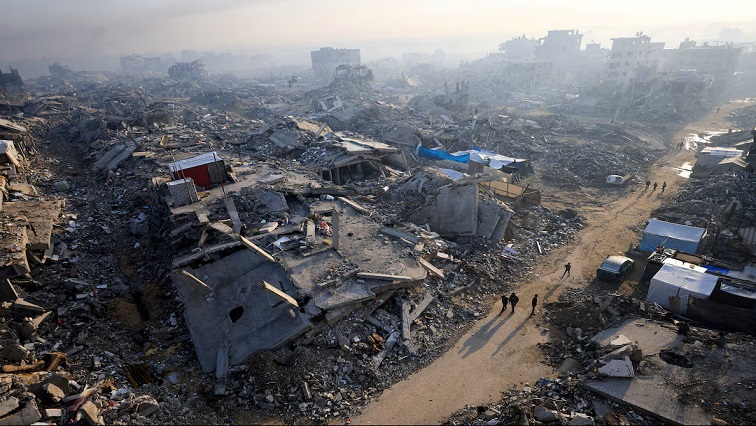
Satellite imagery shows that just 448 hectares of farmland remain accessible and suitable for cultivation. In October 2025, about 601 hectares were still available for farming.
FAO Director of the Office of Emergencies and Resilience Rein Paulsen warned that opportunities to restore food production are rapidly disappearing. “This latest assessment paints a stark picture of the continued deterioration of Gaza’s agriculture sector,” Paulsen said.
“Without urgent action to restore safe access and provide farmers with the support they need, opportunities to restore local food production will continue to diminish.”
The findings highlight the growing pressure on Gaza’s food supply, with farmers increasingly unable to access land, water, seeds and other essential farming inputs.
Farmer Taysir Dahdouh, who previously earned a living growing tomatoes and cucumbers, said the conflict had destroyed nearly everything. “I had a good income before the war. Suddenly, we were left with nothing,” Dahdouh said.
“Even the steel frames of the greenhouses disappeared, along with our homes, belongings and irrigation pipes. Nothing was left.”
After returning from displacement, Dahdouh and family members attempted to rehabilitate a small portion of land using basic tools. “We managed to rehabilitate about one dunum of our land to bring it back to life,” Dahdouh said.
Farmer Wajiha Dahdouh said a lack of farming supplies has become another major obstacle. “There is not enough water, there are no fertilisers, no seeds, and none of the basic necessities that would allow people to continue their lives,” Dahdouh said.
According to FAO, the sharp decline in available farmland is now driven primarily by access restrictions rather than additional physical destruction.
In June 2026, more than 4 000 hectares of cropland were technically reachable, but approximately 3 600 hectares were unsuitable for cultivation because of damage and other limitations.
The greatest losses have occurred in Deir al-Balah and Khan Younis, where expanding military-controlled zones have further reduced access to agricultural land.
Rafah has experienced the most severe impact, with 97.2% of cropland and 98.4% of greenhouse areas now inaccessible.
FAO said the heaviest physical destruction remains concentrated in North Gaza and Gaza governorates.
The assessment comes as humanitarian agencies continue to warn of worsening food insecurity across Gaza, where more than 2 million people are living in increasingly confined areas amid ongoing hostilities.
The UN said restoring agriculture will be essential to improving food security, but recovery efforts will require safe access to land, water, farming equipment and agricultural inputs.
–UN/ChannelAfrica–





