

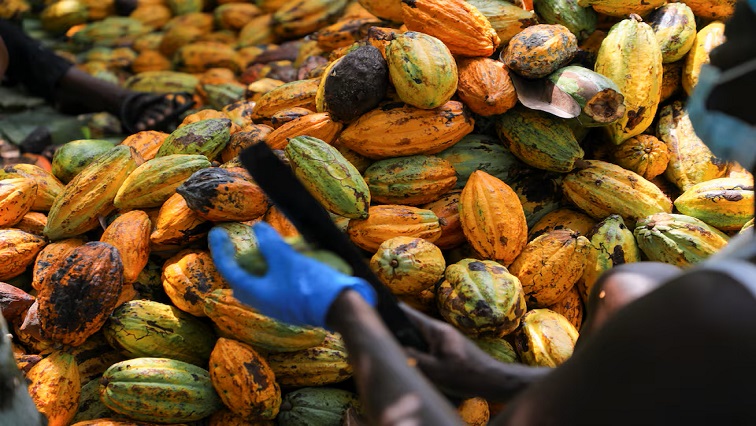
Ghana’s cocoa regulator has accused some officials at licensed buying companies of using government funds to buy cheap beans smuggled from the Ivory Coast, depriving local growers of income and threatening Ghana’s reputation for quality cocoa.
Jake Kudjo Semahar, director of special services at the Ghana Cocoa Board (COCOBOD), told Reuters the practice had spread across four regions along the Ghana-Ivory Coast border, marking a reversal from earlier smuggling patterns, when Ghanaian beans were trafficked into Ivory Coast and Togo.
“We were fighting smuggling of Ghana’s cocoa to Ivory Coast, now the reverse is the situation and we should be concerned,” Semahar said.
The practice is driven by a wide price gap. Ivory Coast is selling cocoa at the equivalent of 1 200 cedis ($107.33) per 64-kg bag, compared with Ghana’s farmgate price of 2,587 cedis.
Semahar said some officers and clerks were exploiting the spread to generate illicit profits.
The Licensed Cocoa Buyers Association of Ghana distanced member companies from direct responsibility.
General Secretary Vitus Dzah told Reuters no licensed buying company would sanction such purchases, blaming individual purchasing clerks acting out of personal greed.
“They go to the extent of giving money to middlemen who go inside Ivory Coast and buy the cocoa for them,” he said, adding that LBCs had suffered heavy losses from a similar episode in the 2004/2005 season.
The allegations deepen concerns over a prolonged liquidity crisis that has plagued Ghana’s cocoa sector for months, leaving farmers unpaid for beans delivered since November 2025.
“Apart from denying farmers their income, Ghana is effectively subsidising producers in Ivory Coast,” Semahar said, warning that blending foreign beans with Ghanaian supplies risked eroding the premium quality status that gives the country’s cocoa its global market advantage.
COCOBOD’s anti-smuggling unit last week arrested four suspects and impounded over 100 bags of Ivorian cocoa in Nkrankwanta in the Dormaa West District, an operation Semahar described as the start of a broader crackdown.
The board said it had opened investigations into the matter and that sanctions would follow if involvement by LBCs was confirmed at the institutional level.
The board said it had opened investigations into the matter and that sanctions would follow if involvement by LBCs was confirmed at the institutional level.
–Reuters–





