


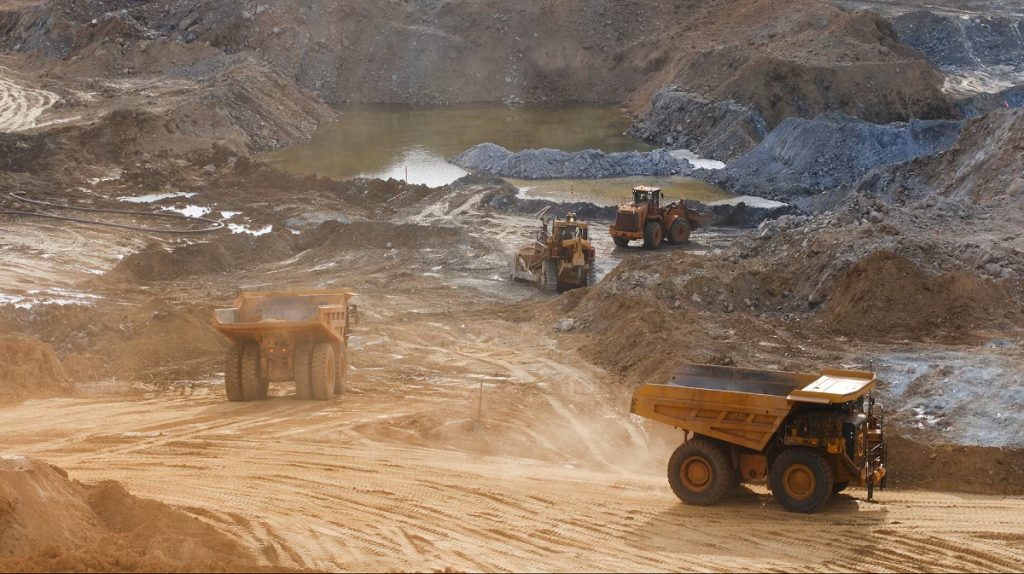
Although Ghana remains Africa’s largest gold producer, the Chamber of Mines has warned that the tax has discouraged new exploration activity, contributing to a slowdown in the development of fresh mining projects.
Ghanaian Economist, George Antwi-Boasiako, told Channel Africa on Wednesday, that the measure forms part of a broader effort to maximise the country’s mineral wealth. He noted that gold accounts for close to 60% of Ghana’s export earnings, making the sector central to the country’s economic strategy.
Antwi-Boasiako said the removal of the VAT would encourage more prospecting, the first and most risky stage of mining. “Prospecting is high risk. Some investors commit over $100 million just to assess whether the land holds viable gold deposits. Removing the tax is a strategy to attract more investors into the sector, and stakeholders are welcoming it,” he explained.
He added that the policy forms part of a dual approach: increasing exploration while positioning Ghana to add more value to its gold. The Government is establishing a Gold Board and expanding refining and jewellery production, aiming to reduce the export of unprocessed gold.
“As investors discover more gold, the Government will buy through the Gold Board and then export through our trade system. So the country benefits twice,” he said.
Questions remain, however, about how mining communities will benefit. Antwi-Boasiako acknowledged that despite more than a century of mining, many communities have not seen meaningful improvements in living conditions. He urged the Government to prioritise social and environmental protection.
“The communities within the mining enclaves must not suffer. The proceeds must translate into better lives. I believe this Government’s social orientation means this will form part of negotiations,” he said.
Beyond gold, Ghana hopes that scrapping the VAT will also stimulate exploration for other minerals, broadening the country’s mining prospects.
–ChannelAfrica–


