


It is a 30-year development framework aimed at transforming the country’s economic and social landscape through large-scale investment in key sectors, including energy, transport, water and sanitation, and commercial infrastructure.
The plan, developed by the National Development Planning Commission, is part of Ghana’s broader long-term strategy to build resilient national systems by 2057, the centenary of the country’s independence. It seeks to prioritise domestic financing and private sector participation as core drivers of the country’s infrastructure expansion.
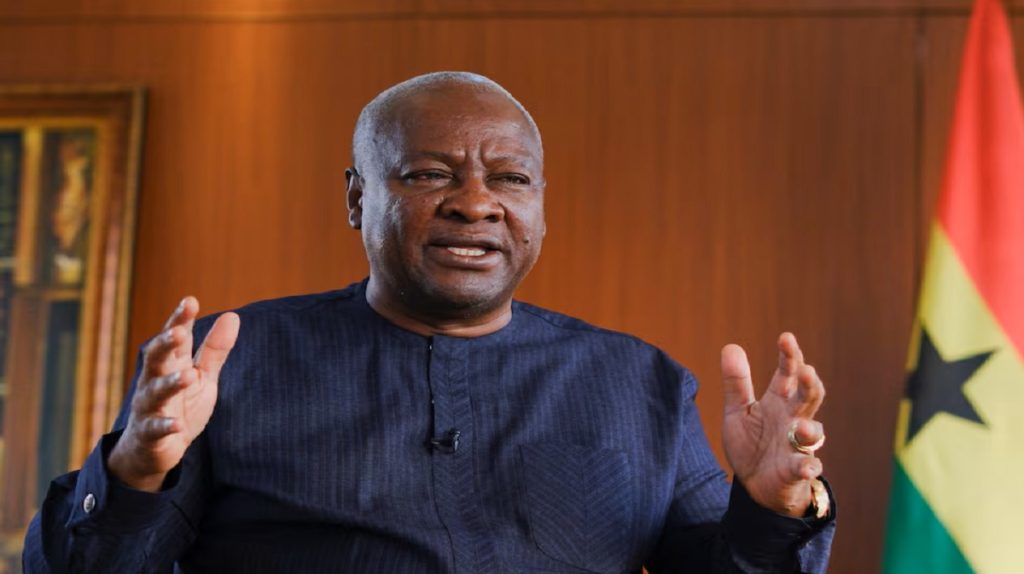
Speaking during the launch, Mahama described the plan as “a cornerstone for national development” that will guide Ghana’s journey towards economic self-sufficiency. The framework was initially completed in 2016 and revised in 2019, but implementation stalled due to inefficiencies in public spending and governance structures.
Economist George Antwi-Boasiako, speaking to Channel Africa on Friday, described the plan as both ambitious and necessary for Ghana’s future.
“This is a call to Ghana’s development agenda,” he said. “We are looking at how we can expand infrastructure across key areas of the economy. It’s a bold initiative that continues the vision of Ghana’s first President, Kwame Nkrumah, who saw infrastructure as the backbone of national progress.”
Antwi-Boasiako highlighted that inefficiencies in project management have historically undermined Ghana’s infrastructure drive.
“According to the Auditor General’s report, Ghana lost over $70 billion through cost overruns and mismanagement. If those resources are redirected efficiently, the country can meet its development targets without excessive borrowing,” he noted.
Fiscal discipline, he said, will be crucial. “We must cap our debt-to-GDP ratio at around 45% to prevent debt servicing from crowding out infrastructure investment. The government’s commitment to measured spending in priority sectors is a good sign that lessons are being learned.”
The GIP also aims to attract foreign direct investment, especially in technology-driven and sustainable projects. “The plan creates opportunities for technology and skills transfer,” Antwi-Boasiako added.
“We are already seeing government initiatives such as the ‘Big Push Agenda’, which aims to mobilise about $13 billion this year and up to $30 billion next year for infrastructure development.”
He said these investments will focus on upgrading digital and transport networks, expanding renewable energy capacity, and enhancing industrial competitiveness to leverage regional trade under the African Continental Free Trade Area.
“The government’s approach is not only about building roads or power plants,” Antwi-Boasiako explained. “It’s about positioning Ghana as a regional hub for investment, trade, and innovation, and that requires strong partnerships between the public and private sectors.”
–ChannelAfrica–


