
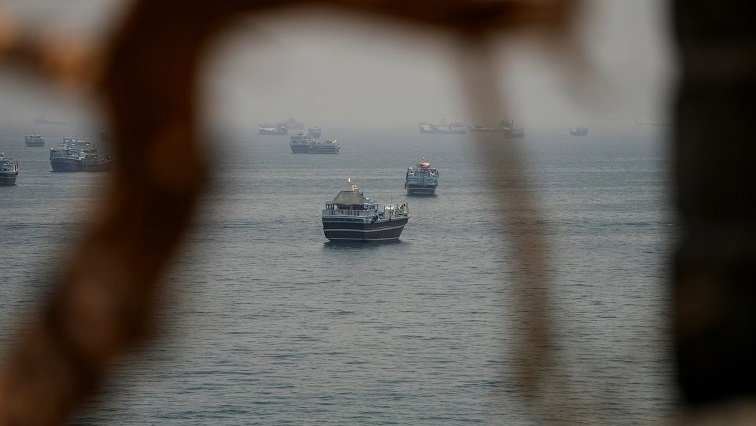
The Strait of Hormuz, Red Sea, Black Sea and Panama Canal have all experienced disruption, forcing vessels onto longer routes and increasing the cost of transporting food, fuel and other essential goods.
Seaborne trade reached 12.3 billion tonnes in 2025, but growth slowed to 1.9%, half the rate recorded in 2024.
UNCTAD expects maritime trade growth to recover to 3.2% in 2027.
More than 80% of globally traded goods are transported by sea, making shipping disruption a significant threat to international supply chains and consumer prices.
“When shipping costs rise, consumers ultimately pay the price, but not everybody pays it equally,” UNCTAD Acting Secretary-General Pedro Manuel Moreno said.
Attacks on shipping linked to the Iran-US war brought oil and gas movement through the Strait of Hormuz close to a standstill.
The disruption increased fuel, transport and production costs, placing greater pressure on economies with limited capacity to absorb shocks.
“Small island economies and least-developed countries are particularly exposed,” Moreno said.
“Every additional mile means more fuel, more time and more cost.”
War-risk insurance premiums for a tanker valued at $100 million reportedly increased from approximately $200 000 to $1 million per voyage within days of the Hormuz disruption.
Container shipping companies also introduced emergency war-risk charges and fuel surcharges to recover higher operating expenses.
Ships continued transporting goods during 2026, but rerouting increased distances and costs.
UNCTAD projects that trade volumes will remain unchanged during 2026 while the total distance travelled by vessels increases by 1.5%.
The agency warned that if the fuel-price shock continued into 2027, shipping costs could drive consumer-price increases in least-developed countries to almost twice the global average.
“Disruption in one critical maritime corridor can quickly become a cost-of-living crisis thousands of miles away,” Moreno said.
South-South container routes connecting markets, ports and manufacturing centres across Africa, Asia, Latin America and the Middle East recorded stronger performance.
Trade along the routes increased by 12.1% in 2025 and accounted for nearly one-third of growth in containerised commerce.
Least-developed countries, most of which are in Africa, also improved shipping connectivity three times faster than the rest of the world during the past two decades.
However, UNCTAD said the improvements had not eliminated vulnerability to maritime disruption.
The agency called for shared reserves of food staples and fuel, pre-agreed alternative shipping routes and coordinated customs procedures to keep essential goods moving during future crises.
Stronger contingency planning would be necessary to prevent disruption at maritime chokepoints from worsening inflation and inequality in vulnerable economies, UNCTAD said.
–UN/ChannelAfrica–