

Guinea’s anticipated return to the African Union (AU) is likely to deliver political legitimacy rather than meaningful democratic change, according to a Senior Risk Analyst, as the continental bloc moves to end the country’s four-year suspension following a military coup.
Beverly Ochieng, a senior analyst at Control Risks, said the AU’s recommendation to lift Guinea’s suspension should be seen largely as symbolic, even as it marks a turning point in the country’s post-coup transition.
“At this stage, the significance is mostly political,” Ochieng said. “Reinstatement allows Guinea to re-enter AU decision-making spaces after years of isolation, but it does not resolve deeper questions around governance and democratic consolidation.”
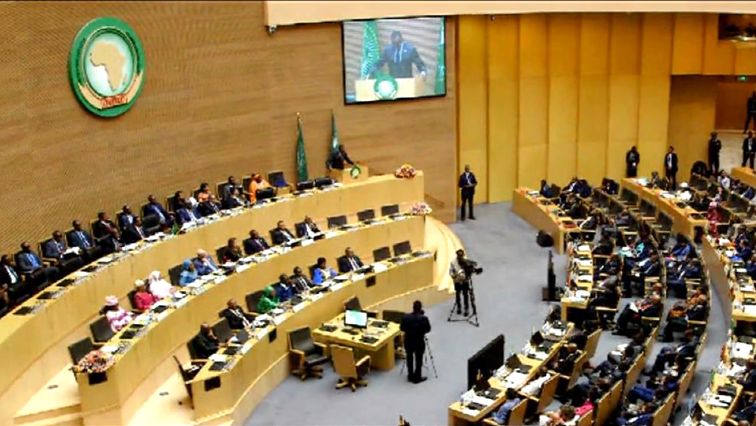
The recommendation was made at an AU meeting in Addis Ababa, where Commission Chairperson Mahmoud Ali Yusuf said Guinea had reached a decisive milestone by adopting a new constitution and holding presidential elections in December.
Guinea was suspended from the AU in 2021 after Colonel Mamady Doumbouya seized power in a military takeover. Last month, Doumbouya won the presidency with more than 70% of the vote, officially ending the period of interim military rule. Opposition groups, however, have disputed the conduct and credibility of the election.
For the AU, the holding of elections remains the primary benchmark for restoring a country’s standing, even when the process is contested, Ochieng said.
“This election allows Doumbouya to transition from being viewed as a junta leader to a president, which makes political re-engagement easier for continental institutions,” she noted.
If Guinea’s suspension is formally lifted, the country will be able to participate fully in AU meetings and mechanisms, giving Doumbouya greater diplomatic leverage. Ochieng said renewed engagement could also help Guinea attract foreign investment at a time of rising socio-economic pressure.
The country holds some of the world’s largest untapped iron ore reserves and is seeking to position itself as a strategic supplier, particularly through the Simandou mining project, which carried out its first exports shortly before the election.
However, Ochieng warned that Guinea’s trajectory reflects a broader pattern across the continent, where military leaders who seize power later entrench themselves through electoral processes.
“Regional and continental bodies have struggled to prevent coup leaders from overseeing political transitions and then legitimising their rule through elections,” she said, pointing to similar developments in Chad, Gabon and Sudan.
Despite the diplomatic momentum, Guinea continues to face deep domestic challenges. Public frustration remains high over the rising cost of living, electricity shortages and poor infrastructure, while political tensions persist as opposition figures remain in exile or in detention.
–ChannelAfrica–


