


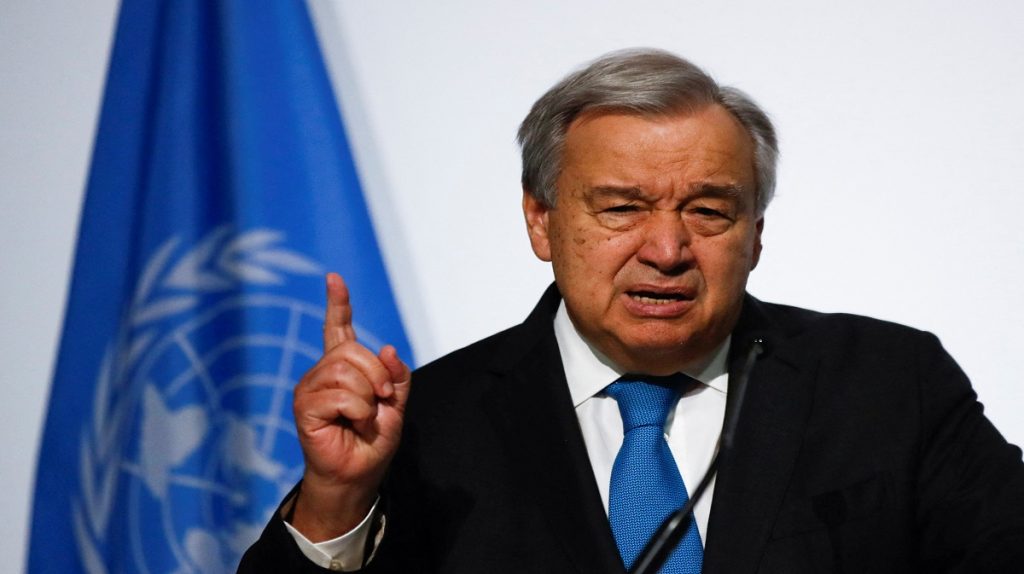
They warned that the world is watching as disagreements persist over fossil fuels, climate finance and adaptation support.
Speaking separately, both leaders urged ministers and negotiators to push past deadlocks and commit to phasing out fossil fuels while increasing finance for vulnerable nations.
They argued that fairness, ambition and scientific evidence must steer the final stages of COP30. Guterres called the 1.5°C limit “the only non-negotiable red line”, urging countries to “follow the science and put people before profit”.
He pressed governments to triple adaptation finance and deliver credible emissions-cutting plans, warning that any final agreement must balance the urgent need for adaptation resources with the necessity of reducing soaring emissions.
For millions of people, he said, adaptation means “the difference between replanting or going hungry, between remaining on ancestral land or losing it forever”.
On fossil fuels, Guterres insisted that a “just, orderly and equitable transition” remains essential, as agreed at COP28. He urged countries to end “market distortions that favour fossil fuels” and reject disinformation aimed at undermining the shift to renewable energy.
Tensions rose further on Thursday after a fire broke out in a pavilion at the COP30 venue, prompting evacuations and briefly disrupting negotiations. Brazilian and UN security teams quickly cleared the area.
The blaze was brought under control within minutes, and no injuries were reported. The cause is still under investigation.
At a press conference the night before, President Lula argued that any roadmap for the energy transition “must be taken seriously”. Brazil proposed the roadmap, he said, to demonstrate credibility and avoid imposing deadlines on other nations.
“If fossil fuels generate much of the world’s emissions, we must start thinking about how to live without them, and how to build that path,” he said, noting that Brazil extracts five million barrels of oil a day.
Lula also urged oil companies, mining firms and the “super-rich” to contribute meaningfully to the transition, and called on multilateral banks to stop charging “exorbitant interest rates” to African and Latin American countries, converting part of those debts into investment.
He praised public engagement at COP30, highlighting record Indigenous participation and calling the November 15 Peoples’ March “exceptionally beautiful and orderly”.
–UN/ChannelAfrica–


