

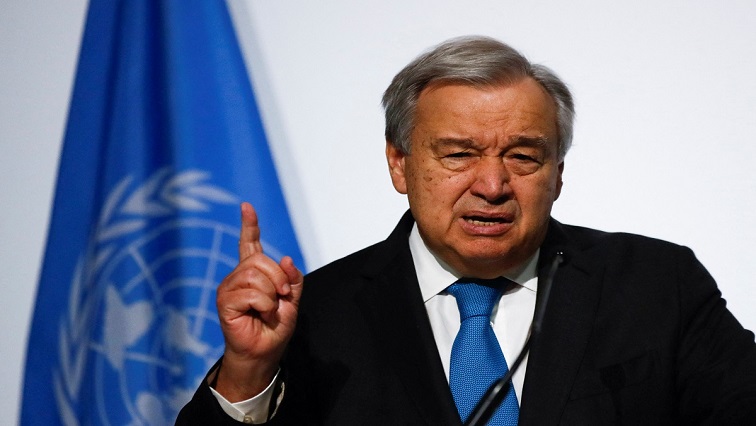
Speaking in Nairobi at the Africa Forward Summit on Monday, UN Secretary‑General António Guterres said maintaining a ceasefire and keeping the Strait of Hormuz fully open is essential to global stability.
“My strong appeal is for the negotiations to go on until that diplomatic solution is found, the ceasefire to be maintained, and in between, the Strait of Hormuz to be completely open,” Guterres said. “Any restart of the fighting would have terrible consequences.”
Guterres stressed that the crisis is not remote for Africa. Roughly 13% of the continent’s imports, largely oil and fertilisers, transit through the narrow maritime corridor linking the Persian Gulf to global markets. “It is absolutely essential,” Guterres said, calling for the strait to operate without restrictions. “That is a must from the point of view of the interests of the international community as a whole.”
Oil price volatility is already feeding through to agricultural inputs. Guterres warned that fertiliser costs are surging at a critical moment for many African farming economies.
The price of urea, one of the most widely used nitrogen‑based fertilisers, has risen by more than 35% in just one month, coinciding with peak planting periods in several countries.
Kenya faces less immediate exposure because much of its planting season has concluded, but Guterres cautioned that many African states are still awaiting fertiliser shipments produced in the Gulf. “Without fertilisers, we risk a serious food security problem next year,” Guterres warned.
Disrupted shipping through Hormuz is driving up transport costs, fertiliser prices and energy bills, compounding existing pressures from climate shocks and strained public finances across Africa.
Guterres emphasised that reopening the strait would be the fastest way to stabilise energy and fertiliser markets and to reduce the downstream risks to food prices and agricultural production.
–UN/ChannelAfrica–





