

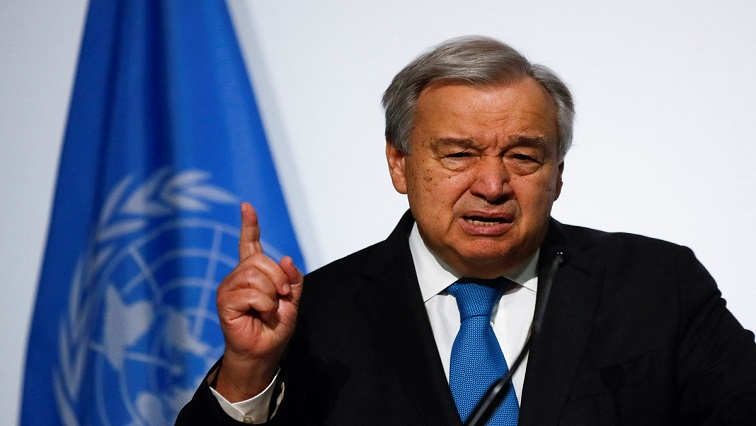
Speaking at London Climate Action Week on Tuesday, Guterres said the world is facing interconnected crises driven by fossil fuel dependence, linking climate change to rising geopolitical tensions and energy instability. “These crises may seem separate, but they share the same destructive origin: fossil fuels,” Guterres said.
He warned that continued reliance on oil and gas is fuelling both environmental degradation and economic shocks, including recent disruptions to global energy markets linked to conflict in the Middle East.
Guterres described the current situation as the “mother of all energy shocks”, with developing countries bearing the heaviest burden through rising debt, food insecurity and weakened economic growth.
Guterres outlined a seven-point plan to accelerate the global shift away from fossil fuels, stressing that emissions must peak immediately and reach net zero by 2050.
He called for an end to subsidies for new fossil fuel projects and urged governments to redirect resources toward renewable energy and climate adaptation. “The world phased out leaded gasoline, methane pollution must be next,” Guterres said.
Renewable energy, he noted, is becoming increasingly viable, with solar and wind costs falling sharply over the past decade and investment in clean energy now surpassing fossil fuel financing. “There are no embargoes on sunlight and no blockades on the wind,” he said.
Guterres also turned attention to the growing environmental footprint of artificial intelligence, calling on major tech companies to disclose the full impact of their data centres.
He warned that artificial intelligence infrastructure is rapidly increasing energy and water consumption, with projections showing that by 2030, data centres could use water equivalent to the annual needs of 1.3 billion people in sub-Saharan Africa. “It’s time to come clean,” he said.
Guterres urged companies to commit to powering all data centres with renewable energy within the next decade. Guterres warned that global temperatures are nearing critical thresholds agreed under the Paris Climate Agreement.
“Every fraction of a degree matters,” he said, pointing to the risk of irreversible damage, including melting ice sheets, rising sea levels and the collapse of ecosystems such as coral reefs.
He stressed that a just transition is essential to ensure that developing countries receive the financing needed to adapt and invest in sustainable growth. “Our choices will determine whether the transition is fair or chaotic,” Guterres said.
Guterres also emphasised the importance of protecting science and tackling misinformation, warning that climate denial threatens progress. He concluded with a call for decisive leadership, urging governments to act collectively to avoid irreversible harm and secure a sustainable future.
–UN/ChannelAfrica–


