


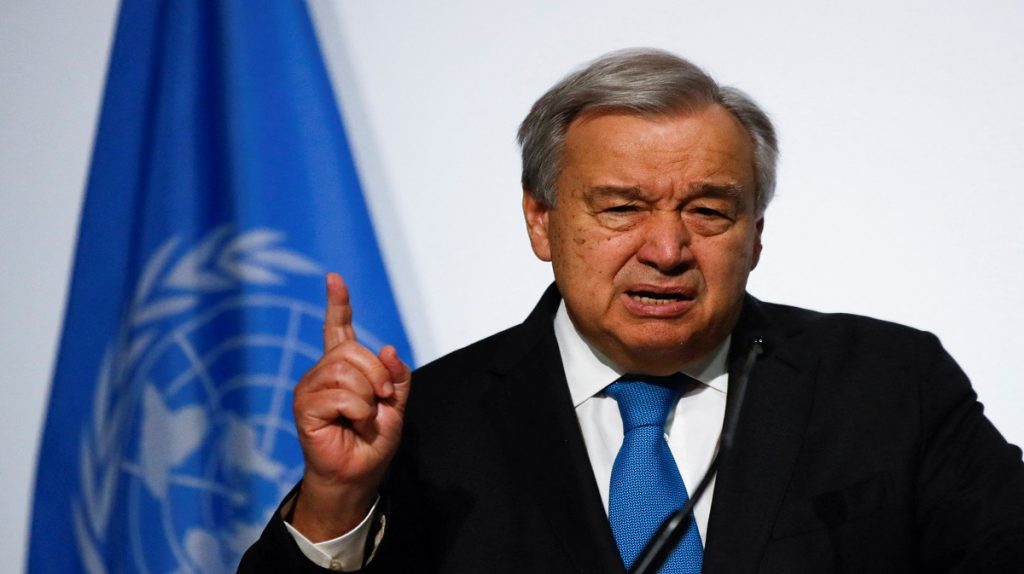
Speaking to reporters outside the UN Security Council in New York on Thursday, Guterres described a rapidly deteriorating situation as Israeli and United States forces continue airstrikes against Iran, while Tehran launches attacks on neighbouring Gulf States and threatens shipping it considers hostile in the Strait of Hormuz.
“Every day this war continues, human suffering grows. The scale of devastation grows. Indiscriminate attacks grow,” the Secretary‑General said. He warned that attacks on civilians and civilian infrastructure are increasing, while economic risks are spreading far beyond the region.
Guterres stressed that the crisis is no longer confined to the Middle East, pointing to growing threats to freedom of navigation in critical maritime routes. He said disruptions in the Strait of Hormuz are already harming the world’s most vulnerable populations.
“When the Strait of Hormuz is strangled, the world’s poorest and most vulnerable cannot breathe,” he said.
The knock‑on effects, he noted, are being felt across continents, as rising food and energy prices strain households in countries such as the Philippines, Sri Lanka and Mozambique.
In an effort to halt the escalation, Guterres announced that he is dispatching his Personal Envoy, Jean Arnault, to the region to support ongoing diplomatic initiatives. He urged all parties to give peace efforts the necessary space to succeed.
“The spiral of death and destruction must stop,” he said, underscoring that any resolution must be grounded in international law and the UN Charter.
The Secretary‑General called for respect for the sovereignty and territorial integrity of all states, protection of civilians and the safeguarding of nuclear facilities in Iran and elsewhere, warning that further escalation could have irreversible consequences.
Addressing the main protagonists directly, Guterres said: “To the United States and Israel, it is high time to stop the war that is inflicting immense human suffering and already triggering devastating economic consequences.”
He added that Iran must immediately end attacks against its neighbours. Recalling recent Security Council condemnations of attacks on Gulf States and declarations on freedom of navigation, Guterres said global leaders retain the power to prevent further catastrophe.
“Conflicts do not end on their own,” he concluded. “They end when leaders choose dialogue over destruction. That choice still exists. And it must be made now.”
–UN/ChannelAfrica–


