

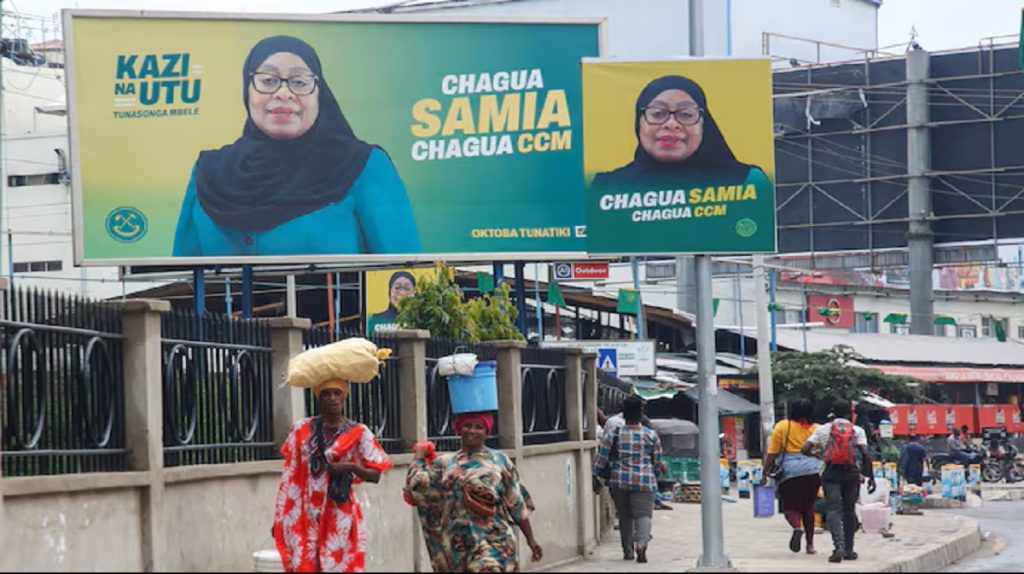
Speaking to Channel Africa on Thursday, Tanzanian international human rights lawyer, Tito Magoti, said the concerns now drawing international scrutiny are “not new”, describing a persistent pattern of abuses including enforced disappearances, abductions, torture, extrajudicial killings and the suppression of civil liberties.
Magoti argued that the country’s governance structures and legal architecture have long shielded the ruling Chama Cha Mapinduzi (CCM) Party from accountability. He said the judiciary remains “dysfunctional”, with Judges appointed directly by the President and major criminal justice institutions dominated by presidential appointees.
He added that Parliament has been unable to provide meaningful oversight since 2020, when 99% of its Members were drawn from the ruling party. According to him, “the quality of deliberations” has often focused more on praising the President than ensuring checks and balances.
Magoti noted that although the events of October 29 appeared to shock many Tanzanians, growing frustrations had been simmering beneath the surface. He said years of political, economic and social grievances had remained unaddressed, creating an environment in which citizens felt increasingly compelled to assert their rights directly.
He described the current moment as a potential turning point: “People are demanding accountability. People are holding the Government to account because CCM has closed all other means of people expressing their grievances.”
Offering a Political Perspective, ACT Wazalendo Party Leader, Dorothy Semu, said the ICC petition is fundamentally about restoring dignity and safeguarding human rights for communities affected by election-related violence. She expressed hope that international judicial intervention could ensure that such violations are not repeated.
Semu criticised the handling of mass arrests, treason charges and reported disappearances in the aftermath of the election, saying there had been little adherence to due process. She said many detainees, including members of her party, were taken from their homes regardless of whether they had participated in protests.
She argued that these actions appear designed to intimidate and silence the population rather than to investigate what occurred on election day, asking: “Who commanded for people to be killed, slaughtered, and all the events which took place on the election date?”
–ChannelAfrica–


