


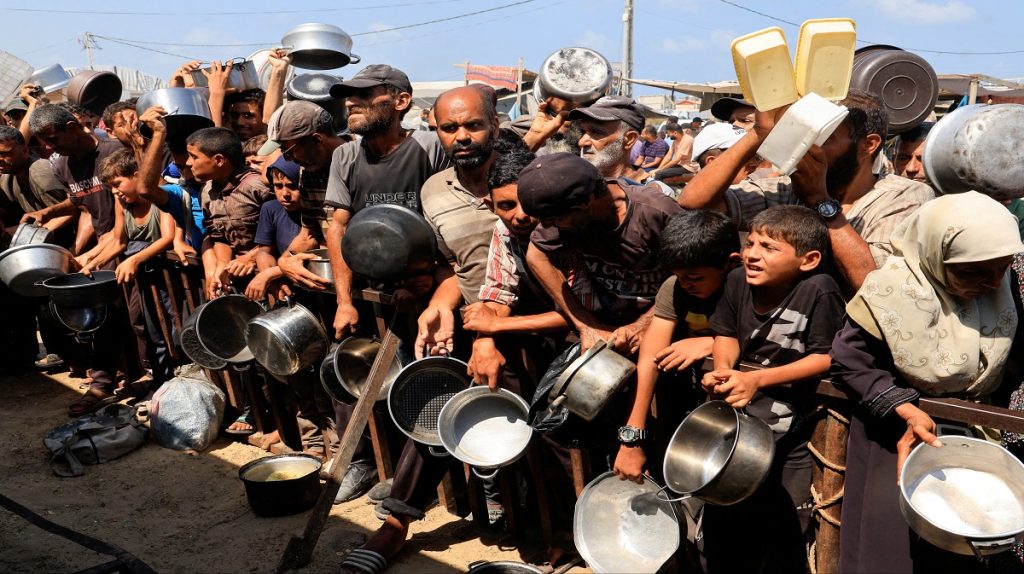
Briefing journalists in New York, UN Spokesperson Stéphane Dujarric said conditions were still “dire” for hundreds of thousands of families across the Gaza Strip who remain in urgent need of assistance.
UN health partners have expanded basic services in recent days. As part of a catch‑up vaccination campaign launched last week, more than 6 000 children under the age of three have now received vaccinations to protect against preventable diseases.
On food security, the UN and its partners are now providing daily bread rations to at least 43% of the population. These are either free or sold at a heavily subsidised rate of less than $1 for a two‑kilogramme bundle.
This support is supplemented by monthly household distributions of wheat flour, reaching 1.2 million people this month.
Shelter and winter‑related assistance has also increased. Over the past week, humanitarian partners delivered tents, tarpaulins, sealing‑off kits, mattresses and blankets to more than 7 500 families, while 1 400 children received winter clothing.
“Since Wednesday, our partners have reached over 2 300 families with cash vouchers and in‑kind winterisation support. They have also provided mental health and psychosocial support and case management assistance to hundreds of people,” Dujarric said.
More than one million people still urgently require shelter support, he added, stressing the need for long‑term solutions such as home‑repair tool kits, communal heating spaces and equipment to clear debris and rubble.
Children remain among those most profoundly affected. According to the UN Children’s Fund (UNICEF), years of educational progress in Gaza have been wiped out.
“Almost two and a half years of attacks on Gaza’s schooling have left an entire generation at risk,” UNICEF Spokesperson James Elder said. About 60% of school‑aged children currently have no access to in‑person schooling, while more than 90% of schools have been damaged or destroyed.
To address this, UNICEF is expanding its Back to Learning programme to reach 336 000 children this year through temporary learning centres that will also connect them with health, nutrition and sanitation services.
Elder also underscored the urgent need to reopen the Rafah crossing, describing it as a “lifeline” for medical evacuations, family reunification and the delivery of essential services.
He said families across Gaza remain “desperate” for the reopening, warning that extended closures are worsening an already critical humanitarian crisis.
–UN/ChannelAfrica–


