


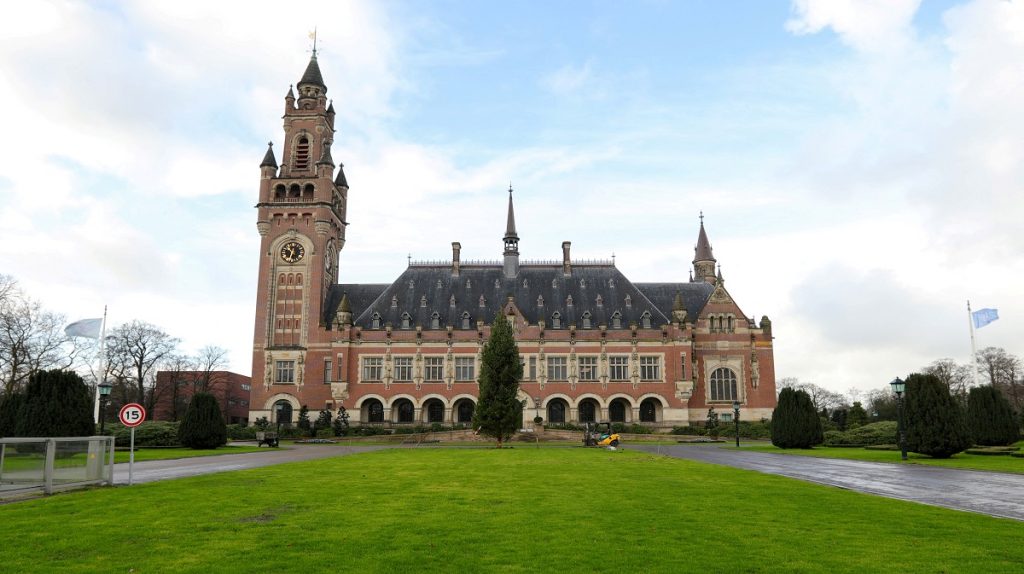
Speaking to UN News, Iwasawa outlined his priorities since assuming office in March this year, including improving the court’s efficiency, maintaining public confidence, and making the ICJ’s work more accessible to people around the world.
Iwasawa explained that the ICJ, also known as the World Court, is the UN’s top judicial body and is responsible for settling disputes between states based on international law.
“The task of the court is to settle disputes among states peacefully on the basis of international law,” he said. “It’s important that people understand we do not deal with individuals, but with interstate cases.”
He noted that the ICJ’s work is often misunderstood and confused with that of the International Criminal Court, which prosecutes individuals for war crimes and crimes against humanity.
The ICJ’s rulings often carry political implications, with some decisions sparking controversy among member states. Iwasawa acknowledged these sensitivities but said the court’s focus remains firmly on the rule of law.
“While the court is not blind to the political or humanitarian context behind disputes, its task is to apply international law to the legal questions before it,” he explained.
He added that the ICJ can only act when states consent to its jurisdiction, highlighting the importance of state cooperation and mutual respect in the international system.
Iwasawa discussed two major advisory opinions issued this year, one clarifying Israel’s obligations to Palestinians living under occupation, and another recognising states’ duty to prevent environmental harm.
Although advisory opinions are not legally binding, he said they are widely regarded as “authoritative statements of international law” that help guide policy decisions worldwide.
“The obligation to prevent significant harm to the environment is now recognised as a norm of customary international law,” he said, adding that this opinion could influence ongoing and future climate litigation.
Iwasawa said his main goal is to strengthen trust in the ICJ by delivering impartial, high-quality judgments. He also plans to modernise the court’s procedures and improve public engagement.
“We are celebrating the 80th anniversary of the court’s inaugural session next April,” he said. “One of our aims is to make our work more accessible to the public through short videos and other outreach initiatives.”
He emphasised that maintaining the ICJ’s credibility and accessibility will be key to ensuring that states continue to view it as a cornerstone of international peace and justice.
–UN/ChannelAfrica–


