

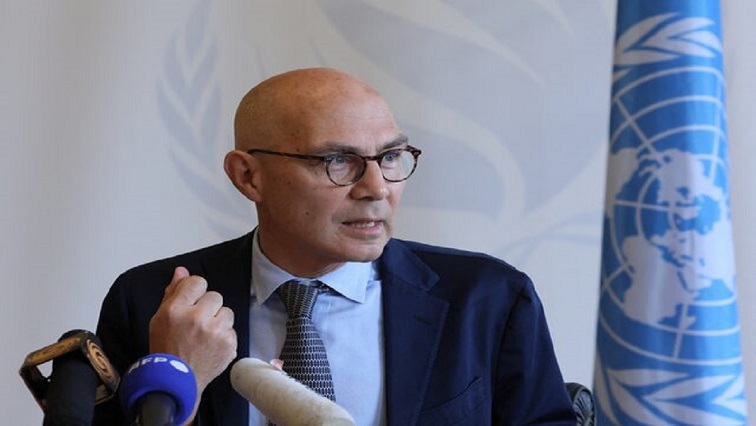
UN High Commissioner for Human Rights Volker Türk told the Committee on World Food Security in Rome that hunger reflected inequality and the denial of fundamental rights rather than insufficient food production. “The right to food has found its way into treaties and laws, but for too many people, it has yet to find its way onto their dinner plates,” Türk said.
Households discard more than 1 billion meals daily, while 1% of farms control over 70% of global farmland.
Women farmers and Indigenous Peoples frequently lack access to land, government assistance and other resources needed to produce food and sustain livelihoods. “Too much of that abundance is swallowed up by injustice and the denial of human rights,” Türk said.
Conflict is driving acute hunger in 12 of the world’s 13 current hunger hotspots. Restrictions on humanitarian assistance and attacks against aid workers are cutting communities off from essential support.
Türk called for stronger social protection, fair taxation and agricultural policies designed to reduce poverty.
Governments should also ensure equitable access to land, water and seeds while taking meaningful action against climate change. “We must do our utmost to ensure the rules of war are upheld, and hunger is never used as a method of warfare,” Türk said.
UN Special Rapporteur on the Right to Food Sofía Monsalve Suárez warned that famine and acute hunger were increasing despite a decline in chronic hunger during 2025.
About 1.4 million people across six countries face catastrophic hunger, nine times more than in 2016.
Another 266 million people experience acute hunger daily, including communities in Sudan, South Sudan, the Democratic Republic of Congo, Yemen and Gaza. “The return of famine and the deliberate use of starvation as a weapon of war is an unprecedented moral challenge for our generation,” Suárez said.
Suárez called for stronger accountability and closer coordination among the UN Security Council, human rights institutions and food-security monitoring organisations.
–UN/ChannelAfrica–





