


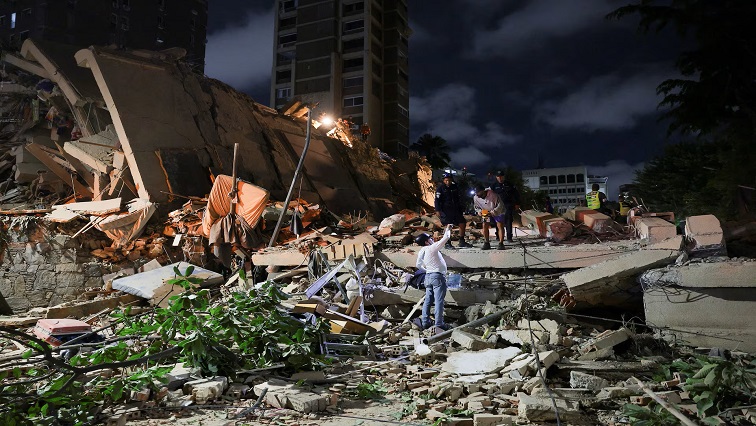
The deployment, supported and coordinated by the United Nations (UN), includes 44 international urban search and rescue teams, comprising 2 245 specialists and 140 search dogs. Their primary task is to locate survivors trapped beneath collapsed buildings and provide immediate medical assistance.
According to the UN Office for the Coordination of Humanitarian Affairs (OCHA), the teams were mobilised at the request of the Venezuelan government and are working in coordination with national authorities.
As of June 27, the death toll has risen to at least 1 430 people, with 3 238 others injured. Rescue operations are continuing, with concerns that more victims could still be found.
The earthquakes, measuring 7.2 and 7.5 in magnitude, affected northern parts of the country, including Caracas and several surrounding states.
A preliminary assessment by the UN Development Programme (UNDP) estimates direct physical damage at around $6.7 billion, equivalent to about 6% of Venezuela’s gross domestic product.
The damage estimate, calculated, ranges between $4.7 billion and $8.7 billion and includes losses to homes and economic assets. It does not yet account for damage to infrastructure, economic disruption or long-term reconstruction costs.
Satellite data indicate that around 8.6 million people were exposed to moderate to severe shaking, including 2.1 million who experienced the strongest tremors. Approximately 1.7 million structures were located in the affected areas.
Initial analysis also points to possible power outages in parts of Caracas, Carabobo, La Guaira and Aragua, based on reduced nighttime lighting detected after the earthquakes.
OCHA has activated emergency coordination systems to manage incoming international teams and support response efforts on the ground.
UNDP officials say rapid and accurate assessments remain critical. “The speed and accuracy of initial assessments are essential for an effective response,” said UNDP Resident Representative Luis Francisco Thais.
–UN/ChannelAfrica–


