

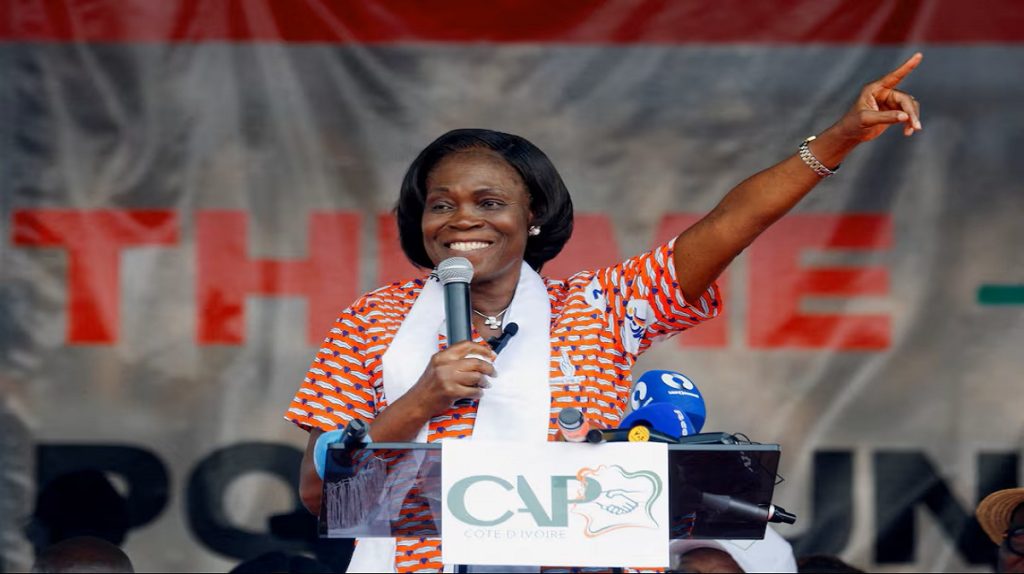
At the centre of the contest is former First Lady Simone Ehivet Gbagbo, who is bidding to become the country’s first female President.
Her unexpected candidacy has injected fresh energy and tension into Ivorian politics, signalling a challenge to President Alassane Ouattara’s long-standing grip on power.
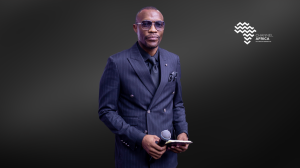
Speaking to Channel Africa on Wednesday, Professor Douglas Yates, Political Scientist at the American Graduate School in Paris, said Simone Gbagbo’s return reflects deep discontent with the ruling establishment. “She wasn’t supposed to be running for President,” he explained. “Ouattara, who’s been in power for about 15 years, is seeking a fourth term, and that in itself is unconstitutional.”
Yates noted that several key opposition figures, including former Prime Minister Tidjane Thiam and former-President Laurent Gbagbo, were disqualified from running.
“When they were eliminated, the remaining candidates were polling as low as 4% or 2%. Simone Gbagbo’s entry effectively challenges what many see as an electioneering manoeuvre to secure Ouattara’s hold on power,” he said.
While Ouattara is expected to dominate in the north, his traditional base, Yates warned that manipulating results in the south could trigger post-election violence. “There’s a real danger of unrest in areas where ethnic-based nationalism remains strong,” he cautioned.
Economically, Ivory Coast has seen poverty levels decline under Ouattara, but regional inequalities persist. “Growth hasn’t been shared evenly,” Yates said. “People in the south feel left behind and internally colonised by those in power.”
On gender, Yates said Gbagbo’s candidacy faces both barriers and potential momentum. “Ivory Coast has never had a female President, so patriarchy is still a factor,” he noted. “But her candidacy could attract strong international support, and domestically, she’s seen by many as the candidate of Ivorian nationalism against French neo-colonial influence.”
The outcome, Yates suggested, will not only test Ouattara’s political durability but could also redefine the role of women and sovereignty in Ivorian politics.
–ChannelAfrica–


