


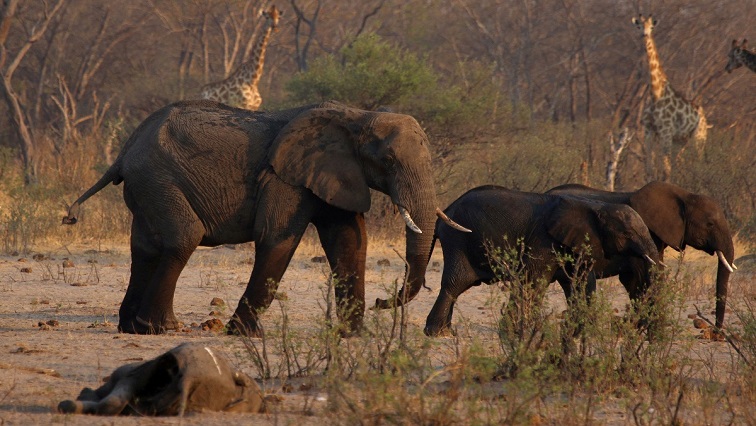
The UN warned that while climate-related disasters such as heatwaves, floods and wildfires often dominate global attention, the steady deterioration of productive land is receiving far less scrutiny despite its far-reaching consequences.
Executive Secretary of the UNCCD, Yasmine Fouad, said healthy land remains essential for economic and social development. “Land is our most vital infrastructure, underpinning food security, water, livelihoods and stability,” Fouad said.
According to UN data, around 40% of the world’s land is currently affected by degradation and drought, placing the livelihoods of roughly 3.2 billion people at risk.
The challenge is particularly severe in Mongolia, where delegates are attending the COP17 conference on desertification in the capital, Ulaanbaatar.
Nearly 77% of Mongolia’s land has been degraded, while about one-third of the population depends on pastoral farming for survival. Severe droughts followed by harsh winter conditions resulted in the loss of more than seven million livestock between 2023 and 2024.
Mongolian Foreign Affairs Minister Battsetseg Batmunkh said the condition of the country’s land has a direct impact on people’s lives. “For Mongolia, land is inseparable from our people, our livelihoods and our future. We know that the health of our land has direct consequences for people’s lives,” Batmunkh said.
The UN also highlighted growing concern over rangelands, vast grassland and dryland ecosystems that provide nearly 70% of the world’s livestock feed.
Around two billion people depend on these areas for food production and livelihoods, but many are increasingly threatened by drought, desertification and unsustainable land use.
Fouad warned that the consequences are no longer confined to environmental concerns. “They are already affecting the food we produce, the water we depend on, the resilience of our economies and the ability of communities to build secure futures,” Fouad said.
The economic impact is substantial. Land degradation and drought are estimated to cost the global economy nearly $900 billion every year, while drought alone causes annual losses of about $300 billion.
A major focus of the COP17 summit is closing a significant funding gap for land restoration and drought resilience projects. The UN estimates that $355 billion is needed annually, but current investment stands at only $77 billion, leaving a funding shortfall of approximately $278 billion.
Mongolian Prime Minister Nyam-Osoryn Uchral said delegates must move beyond commitments and focus on implementation. “The greatest change we want to see from COP17 is a shift from talk to action, from targets to implementation, and from commitments to measurable results,” Uchral said.
–UN/ChannelAfrica–


