

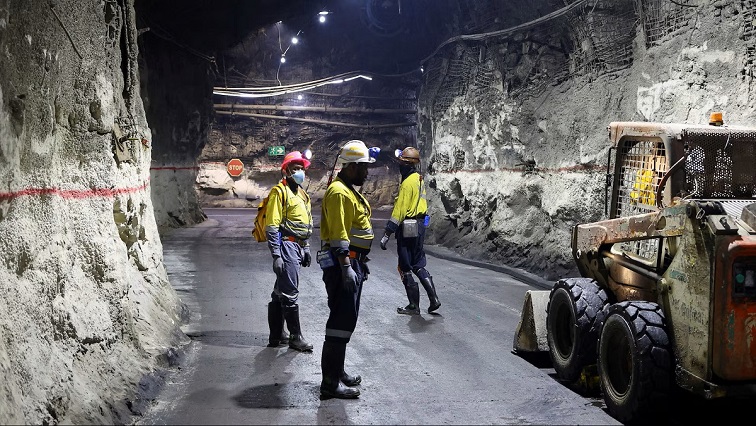
The Junior Mining Council says law enforcement alone will not solve SA’s illegal mining crisis, arguing that deeper structural problems within the mining sector are contributing to the growth of illicit operations.
Speaking to Channel Africa on the issue, Junior Mining Council Corporate Development Coordinator Nkosinathi Mdlolo said investment in exploration and mining projects has declined dramatically over the past two decades.
According to Mdlolo, exploration and mining investment spending has fallen by approximately 95% since 2006, limiting the development of new mining projects and reducing economic opportunities within the sector.
Mdlolo said the decline in investment has led to mine closures and significant job losses. “When there’s less investment coming into the mining industry, especially in terms of investing in new mining projects, what ends up happening is that a lot of mining activity halts, the mining industry shrinks, and it doesn’t grow.”
Mdlolo said many former mine workers and people living in mining communities are left with few alternatives once operations cease. “Because there’s no growth, a lot of the mines start to shut down. And because of that shutdown, hundreds and thousands of jobs get lost.”
According to Mdlolo, economic desperation has contributed to the rise of illegal mining activities commonly associated with zama zamas.
SA’s long mining history has compounded the challenge. Mdlolo noted that the country has more than 6 100 abandoned and ownerless mines, many of which have become targets for illegal mining operations.
“These abandoned mines are obviously a huge issue because what happens is now it creates an opportunity for a lot of these illegal miners to come in and they see it as an opportunity for them to try and make a quick buck,” Mdlolo said.
Mdlolo also pointed to regulatory inefficiencies as a major barrier facing legitimate junior mining companies.
Prospective miners are required to obtain prospecting rights from the Department of Mineral and Petroleum Resources before eventually applying for mining rights. However, Mdlolo said the process is often lengthy and unpredictable. “You’ll find that at times it takes, for you to go that legal route, five, eight, ten years,” Mdlolo said.
According to Mdlolo, delays in licensing and permitting discourage investment because potential investors are unable to accurately predict when projects will become operational.
“When foreign investment looks at this, they say when I invest my money, I want a guaranteed return on my mining project. But now that return is not guaranteed because of these delays and regulatory uncertainties.”
Mdlolo said abandoned mines remain another major challenge. While mining companies are legally required to rehabilitate and close mines once operations end, some operators fail to fulfil these obligations. “When it’s not economically viable anymore, instead of taking responsibility and following through in the process, they end up just upping and leaving.”
Mdlolo said unrehabilitated mines create opportunities for illegal mining while exposing surrounding communities to crime, environmental damage and safety risks.
According to Mdlolo, addressing illegal mining requires a combination of stronger enforcement, improved regulation, faster licensing processes and greater investment in the mining sector to create legal economic opportunities.
Mdlolo argued that without tackling these underlying issues, illegal mining is likely to remain a persistent challenge despite ongoing police crackdowns.
–ChannelAfrica–





