

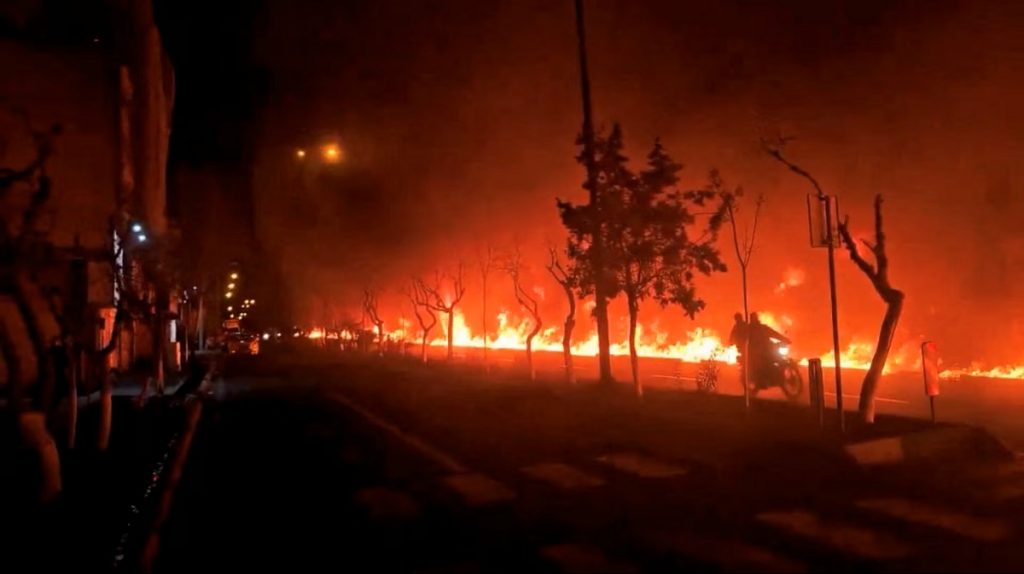
Humanitarian agencies warn that essential services and shelter capacity are now stretched beyond breaking point.
Protection risks are rising sharply, particularly for women, children, older persons and people with disabilities. Aid workers report that overcrowded shelters, lack of privacy and limited access to basic services are increasing exposure to gender‑based violence, exploitation and psychological distress.
Protection teams have expanded their operations, providing psychosocial support and emergency assistance to thousands. However, access constraints, a shortage of shelter space and severe funding gaps continue to hamper the response, leaving vulnerable groups at dramatically heightened risk.
At a briefing to the United Nations (UN) Security Council in New York, on Wednesday, the Deputy Special Envoy for Syria, Claudio Cardone, warned that the regional crisis is increasingly affecting Syrian territory. Most incidents inside Syria have been linked to debris from intercepted Iranian missiles and drones falling within Syrian airspace, causing civilian casualties. One incident of shelling from Lebanon, attributed to Hezbollah, was also recorded.
Cardone highlighted an uptick in Israeli helicopter and drone activity in Syrian airspace, alongside continued cross‑border incursions. Israeli airstrikes on Lebanon have also caused casualties on both sides of the border and triggered an influx of approximately 140 000 people into Syria, most of them Syrians seeking safety.
In Geneva, World Health Organisation (WHO) Director‑General Tedros Adhanom Ghebreyesus said the conflict is severely undermining access to healthcare. WHO has verified multiple attacks on medical facilities across the region, which Tedros described as violations of international law.
Airspace closures and shipping congestion are delaying the delivery of medical supplies, prompting WHO to activate contingency measures and release two million dollars in emergency funding.
More than 1 400 civilian deaths have been reported in Iran, nearly 900 in Lebanon and 20 in Israel, with millions more displaced. “Injured people, displaced families, patients with chronic diseases, pregnant women and all older people must be able to reach lifesaving health services,” Tedros said, adding that “the best medicine is peace.”
–UN/ChannelAfrica–


