


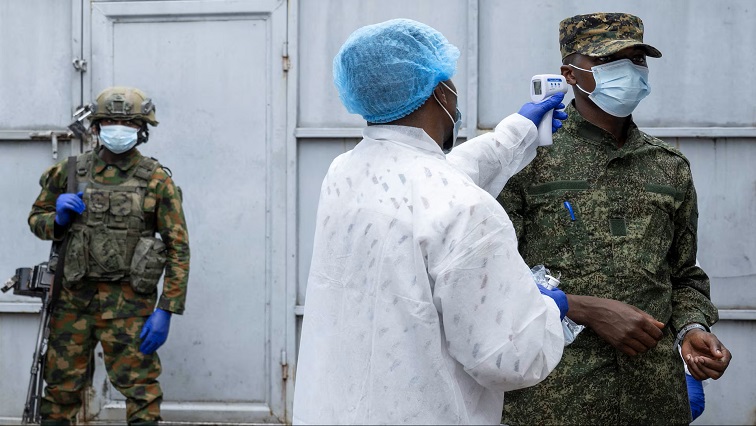
The World Health Organisation (WHO) said the initiative forms part of a major effort to improve community engagement as the outbreak surpasses 5 000 confirmed cases and 2 325 deaths, making it the country’s most lethal Ebola epidemic on record.
WHO Incident Manager for the Ebola response Dr Thierno Baldé said motorbike riders are uniquely positioned to help health authorities because of the role many play in transporting sick people and bodies between communities.
Because of those responsibilities, riders have become one of the groups most exposed to the virus. “The motorbike riders are a key link in the chain of disease surveillance,” Baldé said.
WHO is now working with motorbike associations across affected areas, providing handwashing stations, disinfectant and training while encouraging riders to become active participants in the outbreak response.
Under the programme, riders are being encouraged to alert health teams whenever they transport someone showing Ebola symptoms, allowing suspected cases to be identified and tested more quickly. “They need to be able to tell us wherever they transport a sick person, contact the surveillance team and enable the suspected case to be tested,” Baldé said.
The strategy comes as health workers continue to face resistance in some communities. On Monday, an ambulance involved in the Ebola response was attacked, highlighting the challenges confronting emergency teams. “Almost on a daily basis we face some kind of reaction from the communities,” Baldé said.
Despite these difficulties, WHO believes stronger community participation is essential to slowing transmission. “We are really recentering all of the operational approach, all of our activities, around the engagement of the communities,” Baldé said.
–UN/ChannelAfrica–


