


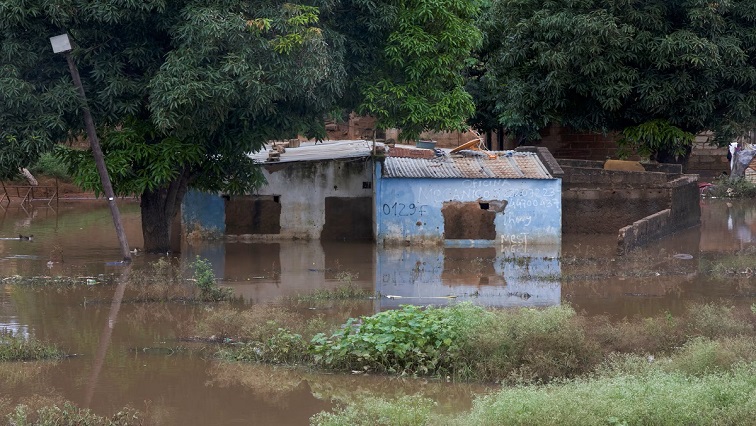
A five-day technical workshop was held last week to pre-validate the National Strategy for Climate Change Adaptation and Mitigation.
Once approved, the Strategy will establish targets, indicators and institutional responsibilities across sectors as Mozambique confronts cyclones, floods, droughts, coastal erosion and other climate-related threats. “Climate change is no longer a distant threat. It is part of our present reality,” Mozambique National Director of Environment and Climate Change Sónia Muando said.
“Cyclones, floods, droughts, coastal erosion, sea-level rise and ecosystem degradation are already affecting communities, agriculture, infrastructure and livelihoods.”
The workshop brought together national, provincial and district authorities, development partners, private companies, civil society organisations and academic institutions.
Participants reviewed lessons from the previous Strategy and considered a draft action plan, resource mobilisation strategy and communication mechanism for the next implementation period.
Muando said vulnerable communities should remain central to the Strategy, with climate action improving food security, water access, housing, infrastructure, livelihoods and economic opportunities.
Adaptation should remain a national priority, supported by greater investment in prevention, preparedness, early-warning systems, spatial planning and resilient construction.
Muando also called for stronger protection of coastal and terrestrial ecosystems and development-focused mitigation measures covering clean energy, energy efficiency, sustainable transport, climate-smart agriculture and forest management.
African Development Bank Group (AfDB) Principal Country Programme Officer Goran Lima said effective implementation would determine whether the Strategy produced meaningful results. “Finalising these documents is not the end of the process. It is the beginning of the more important task of implementation,” Lima said.
Lima added that broad stakeholder support was essential for the Strategy to function as a “whole-of-government and whole-of-society” instrument.
AfDB is financing the update through the Africa Nationally Determined Contributions Hub and the Africa Climate Change Fund Multi-Donor Trust Fund.
The support complements AfDB’s wider engagement in Mozambique across agriculture, transport, energy, water and sanitation, governance and disaster preparedness.
–AfDB/ChannelAfrica–


