


The milestone follows SpaceX’s record-breaking initial public offering, which saw the company’s valuation surge, pushing SpaceX Chief Executive Officer Elon Musk’s net worth to approximately $1.1 trillion and cementing Musk’s position as the world’s richest individual.
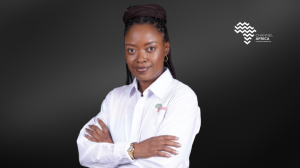
Communications and Media Lead at Fight Inequality Alliance, Ed Pomfret, said the scale of the wealth accumulation reflects structural issues within the global economy. “I had to sit and take a moment with the number… our brains aren’t really built for it,” Pomfret said.
Pomfret said the scale of Musk’s wealth highlights extreme disparities, noting that such fortunes are difficult to contextualise. “If you spend $1 million every single day, it would take you literally 2 700 years to spend that trillion,” Pomfret said.
Pomfret argued that the growth in Musk’s wealth is tied to broader systems of public support and financial markets rather than individual innovation alone.
“Musk’s trillion doesn’t materialise from genius. It’s extracted from the systems that workers built, but government subsidised,” Pomfret said.
He added that such wealth accumulation reflects wider global trends identified in inequality research. “This destroys the myth that extreme wealth is a reward for talent and hard work,” Pomfret said.
Pomfret said much of global billionaire wealth is linked to inheritance, monopoly power or political connections, which he described as a form of “captured power”. “Musk isn’t really an outlier… he’s just the one who scaled the pyramid the furthest,” Pomfret said.
The development has also raised concerns about the concentration of influence in the hands of a single individual. “When one unelected person controls rockets, satellites, a platform that shapes what billions read, that’s not entrepreneurship, that’s power,” Pomfret said.
Pomfret warned that such concentration poses risks to accountability and governance, particularly when private power intersects with public systems. “No one voted for this… there’s no mandate and no accountability,” Pomfret said.
The Fight Inequality Alliance has linked the rise in extreme wealth to global disparities in public services and development outcomes. “When a clinic has no medicine… that’s not about scarcity… the money exists,” Pomfret said.
Pomfret said developing countries, particularly in Africa, Asia and Latin America, face rising debt burdens and funding constraints that mirror the same global financial structures that enable vast wealth accumulation. It’s the same system… that forces African governments to borrow… and spend more servicing that debt than on health,” Pomfret said.
Despite the scale of inequality, Pomfret said growing public awareness and activism suggest increasing pressure for reform. “People around the world can feel that this is unjust,” Pomfret said.
Pomfret pointed to global movements advocating for wealth taxes, debt relief and economic restructuring as evidence of rising demands for change. “The 1% have control… but the 99% have the majority, the moral case,” Pomfret said.
–ChannelAfrica–


