


According to the World Food Programme (WFP), rising fuel, food, and fertiliser prices, driven largely by the ongoing conflict in the Middle East, are pushing already vulnerable families closer to hunger.
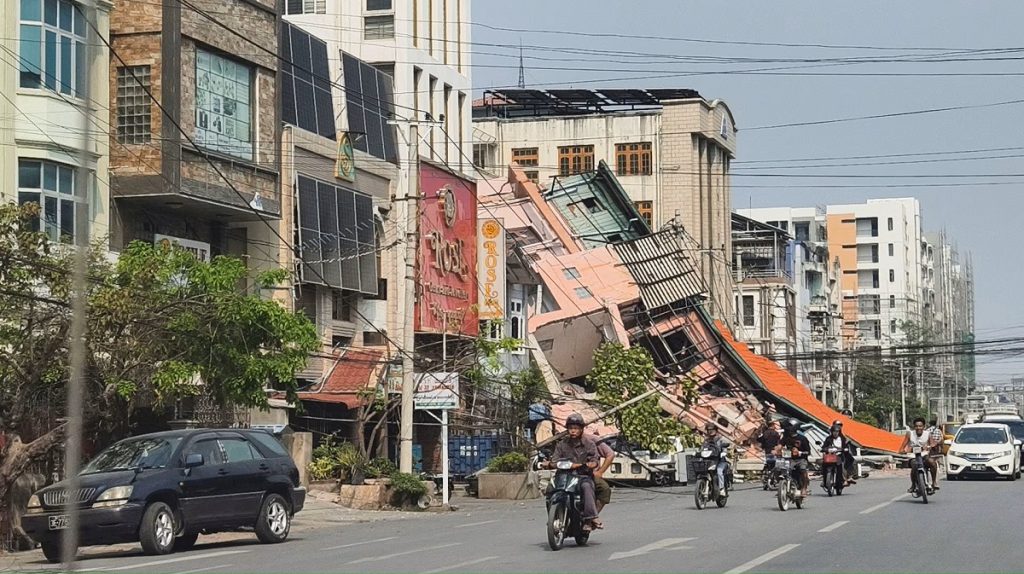
Recent monitoring shows that recovery in quake-hit areas remains fragile.
In the heavily affected regions of Sagaing and Mandalay, one in six households still faces moderate to severe food insecurity, while around half of all families are only marginally food secure. This leaves them extremely vulnerable to even minor economic or environmental shocks.
WFP Country Director Michael Dunford warned that survivors have had little time to rebuild their lives: “People who survived the earthquake have barely begun to stand again, and now another blow is knocking them back down.”
The conflict in the Middle East has disrupted transportation networks and driven fuel shortages across Myanmar. Higher fuel prices are increasing the cost of transporting food and agricultural goods, placing further pressure on household budgets.
Farmers are also being hit hard as they prepare for the upcoming monsoon planting season. Fertiliser demand is expected to rise sharply in the next three months, but fuel shortages and increased input costs could push production expenses to double last year’s levels, threatening future food supplies.
The compounded effects of conflict, economic instability, and natural disasters are expected to hit hardest in already fragile regions, including Chin, Kachin, Kayah, Rakhine, Sagaing, and Shan. Nationwide, 12.4 million people, nearly one quarter of Myanmar’s population, are facing acute hunger.
Over the past year, WFP has supported around 500 000 earthquake survivors with emergency assistance. The agency has since shifted its focus toward restoring community infrastructure to promote long-term recovery and stability.
WFP says it needs $150 million in 2026 to support 1.5 million people across Myanmar with life-saving food assistance and resilience-building programs.
Without adequate funding, the organisation may be forced to prioritise only the most urgent needs, scaling back recovery efforts that help communities rebuild livelihoods and reduce long-term dependence on aid.
–UN/ChannelAfrica–


