


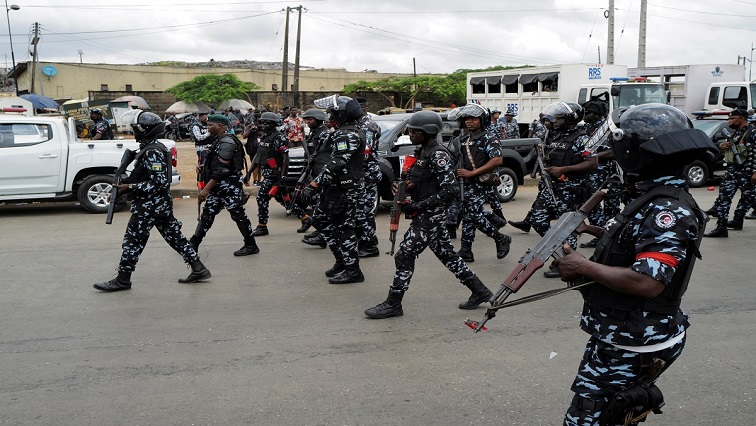
The attack in Borgu Local Government Area has renewed concerns about Nigeria’s worsening security crisis, which now spans multiple regions and involves a range of armed groups.
Centre for Democracy and Development Research Analyst Dengiyefa Angalapu said Nigeria’s security challenge has evolved into a complex, multi-front conflict. “What Nigeria deals with now is a multidimensional conflict,” Angalapu said.
According to Angalapu, insecurity is no longer confined to the northeast, where the Boko Haram insurgency originated, but has spread across the northwest and north-central regions. “The Nigerian government is battling the issue of security at different fronts,” Angalapu said.
“When you’re battling this sort of guerrilla warfare at different fronts, it is a very difficult task.”
Angalapu argued that insecurity in Nigeria cannot be explained by a single factor, saying poverty, unemployment, poor education outcomes and governance challenges are contributing to instability.
The regions most affected by violence are also among the country’s poorest, with high numbers of out-of-school children and widespread multidimensional poverty. “You cannot shoot away poverty, you cannot shoot away issues of unemployment, you cannot shoot away issues that surround injustice,” Angalapu said.
Angalapu acknowledged that security forces have conducted numerous rescue operations in recent years but said the country remains trapped in a cycle of kidnappings and recoveries. “It has become a vicious circle where one rescue leads to another kidnap and one kidnap leads to another rescue,” Angalapu said.
Angalapu warned that kidnapping has evolved beyond ordinary criminality and is now a major source of funding for armed groups. “Kidnapping is no longer an occasional crime. It has become an organised industry,” Angalapu said.
“It finances armed groups, it impoverishes communities and families, it disrupts farming and education, and weakens public confidence in the state.”
Angalapu said the proceeds from kidnappings are helping armed groups acquire increasingly sophisticated equipment. “We have armed groups that use night-vision equipment. We have armed groups that use drones now,” Angalapu said.
“How did they get their funding? Principally through kidnapping and other activities that fund them.”
While Tinubu has ordered a coordinated security response, Angalapu said military action alone will not solve the problem.
Angalapu called for a broader strategy that combines security operations with governance reforms and stronger community engagement. “Dealing with kidnapping requires a whole-of-government approach, but also a whole-of-society approach,” Angalapu said.
“It definitely goes beyond just military action.”
Angalapu said stronger early-warning systems, improved cooperation between communities and security agencies, and investment in development would be essential to addressing the root causes of insecurity and breaking the cycle of violence.
–ChannelAfrica–


