

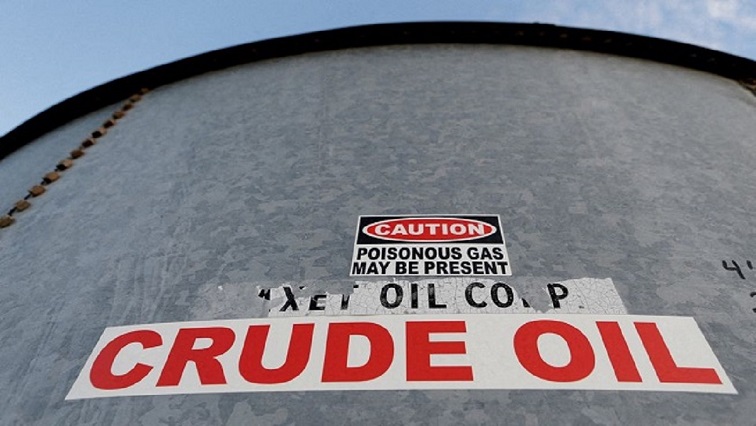
The market had moved higher earlier after Axios, citing unidentified sources, reported on Wednesday that US President Donald Trump is slated to receive a briefing on Thursday on plans for a series of military strikes on Iran in hopes it will return to negotiations on its nuclear programme.
A US official told Reuters on Thursday that the meeting will also include US Defence Secretary Pete Hegseth and General Dan Caine, the chairman of the Joint Chiefs of Staff.
The price of Brent has doubled since the US-Israeli attack on Iran began on February 28, and the US benchmark West Texas Intermediate crude is up around 90% due to the effective closure of the Strait of Hormuz, through which about a fifth of the world’s oil and liquefied natural gas transits.
The oil price gains risk a renewed spike in global inflation and higher pump prices in the US ahead of the midterm elections later this year. Oil, gas, and their refined byproducts are critical for fuelling cars, trucks and planes, powering homes and industry and producing plastics and fertilisers. “For those who do not think Brent prices have the potential to reach $150 a barrel, you ought to look away now,” said John Evans of Oil Broker PVM.
Global oil benchmark Brent crude futures rose as high as $126.41 a barrel, the loftiest since March 9, 2022, but by 15h27 CAT were down $4.14, or 3.5%, to $113.89. The prompt contract for June delivery expires on Thursday. The more active July contract was at $108.70, down $1.74, or 1.6%.
WTI crude futures were down $2.28, or 2.1%, at $104.60. The contract reached $110.93 earlier, the highest since April 7.
Both benchmarks are on track for their fourth month of gains, reflecting fears that the Iran conflict could choke global oil supplies for months to come.
–Reuters–





