
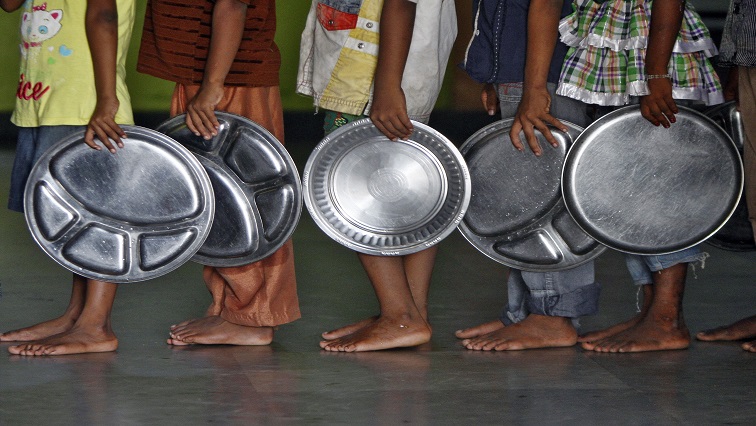
The call was made at the opening of the Third Global Parliamentary Summit against Hunger and Malnutrition in Kenya, the first time the gathering has been held in Africa.
The summit brought together 200 parliamentarians representing 73 countries to discuss legislative and budgetary measures aimed at tackling hunger and malnutrition.
The gathering comes as the latest United Nations figures show that 645 million people faced hunger worldwide in 2025, while 2.7 billion could not afford a healthy diet, according to The State of Food Security and Nutrition in the World 2026.
Speaking to Channel Africa on Tuesday, Food and Agriculture Organisation (FAO) Deputy Regional Representative for Africa Dr Meshack Malo said the summit was examining the role of legislators in ensuring food security. “The main objective is to look at the role of legislators in ensuring that food security is assured,” Malo said.
The summit seeks to move food security policies beyond political cycles by encouraging countries to entrench commitments in legislation, national budgets and constitutions.
Malo said this would help ensure that food security programmes continued despite changes in government. “This wants to move the issue of food security beyond political cycles so that governments, even if there is a change, find legislation and budgets that are entrenched in the constitutions of countries,” Malo said.
Parliamentarians had an important role in holding governments accountable, approving national budgets and passing legislation, according to Malo.
Weak legislative and budgetary frameworks have limited progress towards ending hunger and ensuring that every child has access to food. “At the end of the day, parliamentarians have a very important role in society in terms of keeping governments in check, budgets and legislation,” Malo said.
“These are areas that have been lacking and have slowed progress towards zero hunger and making sure that every child is assured of food.”
Malo said access to food should be recognised as a right rather than treated as assistance provided at the discretion of individual governments.
Progress made under one administration could be reversed when another government took office if programmes were not protected through legislation and dedicated funding. “We have situations where a lot of progress is made under one government, and then when another government comes, food is provided as a favour,” Malo said.
“But any child having food should not be treated as a favour. It should be a right.”
Malo said legislating, funding and monitoring food programmes would improve the prospect of ensuring access to food for every person. “Once these programmes are legislated, budgeted for and monitored through parliamentary processes, the chance of ensuring that every man, every woman and every child has food, which is a matter of dignity, is more assured,” Malo said.
Parliamentarians attending the summit were sharing experiences and measures implemented in different parts of the world, including Latin America and France.
The measures included monitoring budgets and ring-fencing funding for school-feeding programmes throughout national budget cycles.
Malo said school-feeding programmes could improve enrolment while helping countries entrench the right to food. “Budget monitoring and ensuring that funds for programmes such as school feeding are ring-fenced within budget cycles are emerging as important elements that are improving school enrolment and ensuring that the right to food is entrenched,” Malo said.
The summit was also examining evidence from social protection programmes and allowing parliamentarians to share experiences across countries.
Malo said participating countries were expected to return home and make substantial, measurable commitments rather than issue declarations that could not be tracked.
Kenya had announced targets covering school meals and agricultural land to be placed under irrigation, according to Malo. “The President of Kenya has given a target of 10 million children receiving meals and a target for the acreage of agricultural land that is going to be put under irrigation,” Malo said.
The FAO expected such commitments to translate political aspirations into practical action that could be measured by the public. “We look forward to concrete decisions that can turn political aspirations and commitments into real action on the ground,” Malo said.
Malo said measurable commitments would enable citizens to monitor progress and hold political leaders accountable for delivering programmes intended to end hunger and malnutrition.
–ChannelAfrica–
Image: Reuters