


This was the central message from a session at the Investing in African Mining Indaba in Cape Town, where Mark Evans, Energy and Natural Resources Partner at Oliver Wyman, presented a new report titled “Private Sector Participation and the Path to Reviving South Africa’s Rail and Port Logistics.”
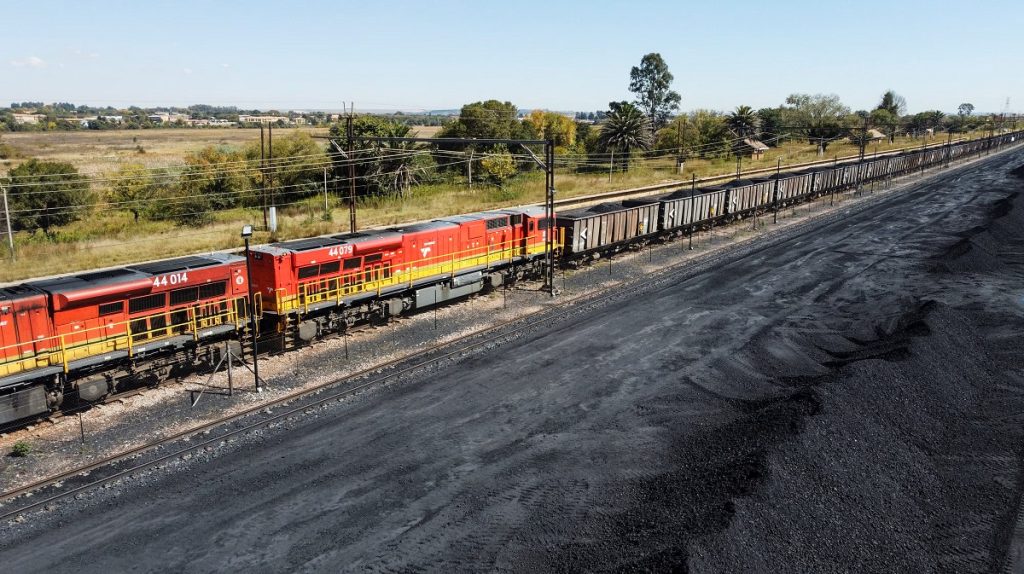
The report warns that years of underinvestment have pushed SA’s logistics backbone into severe decline, disrupting regional trade corridors, weakening mining exports and damaging supply chains across Southern Africa. In an interview with Channel Africa on Tuesday, Evans said the country’s rail and port infrastructure had degraded to a point where it could no longer support the levels of economic activity required for long term sustainability.
He explained that SA’s logistics network is critical for generating national income. However, the state is no longer able to rehabilitate it alone. Transport authorities and Transnet have now acknowledged both limited financial resources and capability constraints. This has prompted a formal appeal for private sector support, and the response has been substantial. Evans noted that a recent request for information attracted more than 160 expressions of interest from private companies eager to participate.
Asked how much rail underperformance is costing SA’s economy each year, Evans said the losses amounted to several billion rand every single day. In his view, the impact is enormous when considering freight such as coal, iron ore, manganese and other bulk commodities. He noted that just in the chrome sector alone, losses amount to roughly $440 million, even though chrome is one of the smaller commodities.
Evans said that fixing rail logistics would have a meaningful effect on the region’s export competitiveness. The decline has forced a large share of bulk commodities onto the country’s roads. This shift has made freight transport more dangerous, accelerated the destruction of roads and increased transport costs by about 30%. Higher costs reduce SA’s competitiveness and cut into export revenues.
The problems extend beyond SA’s borders. Landlocked countries in Southern Africa are increasingly redirecting exports through Namibia and Mozambique because SA’s system is no longer reliable. This shift has changed regional trade routes and reduced SA’s role as a central logistics hub.
However, Evans insisted that these losses are not permanent. In his view, they can be reversed if SA restores network capacity. Many private companies are already reducing or suspending production because they cannot move their goods. Unlocking rail capacity would immediately create room for higher output, leading to more exports and greater revenue for the country.
Evans said international experience shows that the most effective model for reviving failing logistics systems is one that encourages deep collaboration between government and the private sector. He pointed to examples from Mexico and other parts of South America where governments retain ownership of infrastructure, but private companies operate key components such as rolling stock, terminals or maintenance services. He believes a similar approach would suit SA, with the state maintaining ownership of rail and port assets while private operators contribute capital, expertise and operational efficiency.
Evans concluded that SA has a strong opportunity to revive its logistics system if it embraces genuine partnerships with the private sector. He stressed that the private sector is ready and motivated, and that cooperation would offer significant economic benefits for the entire region.
—ChannelAfrica—


