


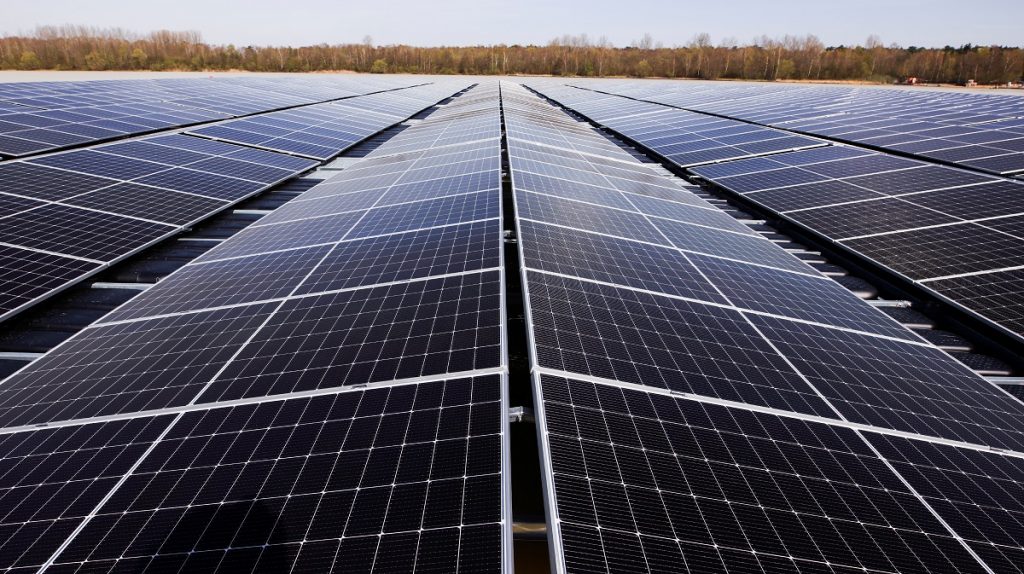
The disruption of supply routes and recurring price spikes have sharpened the case for domestically produced energy sources such as solar, wind and hydropower, which offer greater cost stability and lower exposure to geopolitical risk than imported oil and gas. Renewable expansion is increasingly framed as an energy security strategy, not only a climate measure.
Four countries illustrate different pathways and constraints in the global transition.
Germany is scaling renewables as part of a long-term shift away from fossil fuels. Renewables account for about 55% of electricity consumption, led by wind and supported by solar, biomass and hydropower. A key challenge remains grid stability, given variability in wind generation and ongoing reliance on fossil back‑up for industry and transport. Grid modernisation and energy storage are seen as critical to sustaining the shift.
India, the world’s most populous country, is expanding solar and wind at speed while coal remains dominant. Renewables account for roughly 30% of installed capacity, helping reduce costly fuel imports and stabilise supplies, but energy demand growth continues to test the pace of transition. Large solar parks, rooftop expansion, hybrid systems and green hydrogen efforts are central to the strategy.
Bolivia is attempting to diversify away from natural gas, with renewables providing about 30–35% of electricity generation, mainly hydropower, alongside expanding solar and wind. Structural dependence on gas revenue and infrastructure, plus financing constraints for rapid renewable deployment, remain major hurdles. Solar expansion in rural and high-altitude areas and new wind projects are part of a national growth roadmap.
Nigeria, Africa’s largest economy and most populous country, is heavily reliant on fossil fuels and struggles with frequent power shortages, driving widespread diesel generator use. Renewables contribute roughly 20–25% of electricity generation, mainly hydropower, while solar remains underdeveloped despite vast potential. A national goal targets 50% renewable electricity by 2030, requiring stronger grid infrastructure, higher investment and reduced dependence on gas-fired generation. Off-grid solar, mini-grids and home systems are expanding access, particularly in rural areas.
The UN says across these diverse economies, a clear trend is emerging: renewables are strengthening energy security, reducing exposure to volatile fossil markets and delivering practical benefits, while financing, infrastructure and reliability challenges remain decisive.
–UN/ChannelAfrica–


