


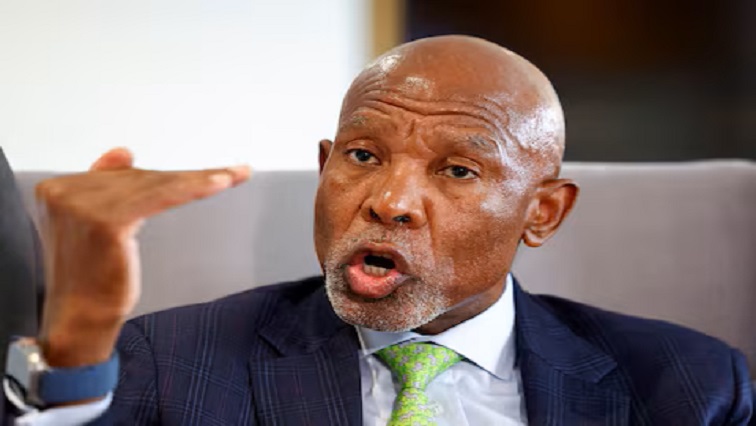
South African (SA) Reserve Bank Governor Lesetja Kganyago says a core group of emerging market economies, including SA, has fundamentally transformed over the past few decades by avoiding sovereign debt defaults, International Monetary Fund (IMF) bailouts and currency collapses.
Kganyago made the remarks on Monday evening during a public lecture hosted by the University of South Africa (UNISA) under the theme “From Fragility to Resilience: The Emerging Market Journey.
The lecture comes at a time when emerging economies are grappling with geopolitical tensions, conflicts, inflation, volatile capital flows and climate-related disruptions.
Addressing the audience, Kganyago said countries with sound macroeconomic policies, strong institutions and fiscal discipline have proven more resilient to repeated global shocks.
He says SA is among a core group of emerging economies that have fundamentally strengthened over recent decades:
“Among the major emerging markets, there is a core grouping which has gone decades without defaults, without IMF bailouts, and without currency collapses. To be clear, not every developing country is stronger. The IMF is still doing bailouts and there are still many vulnerable economies. But there is a core group of big emerging markets that has challenged fundamentally, that has changed fundamentally. Countries like Brazil, India, Mexico, Thailand, and of course, SA. Recognising this, the policy literature has a new theme for emerging markets. The theme is resilience.”
With eyes fixed on SA, Kganyago said the country has avoided the severe macroeconomic crises experienced by many developing economies while implementing key reforms that have strengthened its resilience.
Kganyago also credited key monetary policy reforms for strengthening SA’s economic stability, saying they have improved inflation outcomes, enhanced policy credibility and helped build the country’s foreign exchange reserves.
Reflecting on the lecture, while reminding the audience of Africa’s historical struggles and shifting global power dynamics, UNISA Vice-Chancellor Professor Puleng Lenkabula said universities have a critical role to play in preparing leaders capable of navigating uncertainty and building resilient institutions:
“I want to state that in each epoch in life, there are always geopolitical contestations. In the past, we dealt with transatlantic slavery, trading systems that negated the place of Africa in the trading of global economic systems. Therefore, in today’s geopolitical tensions, it’s truly that contestation of hegemony of which country must shape the discourse, the trading systems, the economies, but also the political power structures in our society.”
“I think the role of universities and African universities must always be a threat because as early as the 10th century and today, the idea is high university training citizens to lead institutions that promote resilience in the context of contradictions as was stated earlier. I think the lecture that we had today is really a conversation with those who are in the front line of policy decisions international but also which have implications for global issues that have impact for the local context.”
–Channel Africa/ Micheal Mbewe–


