


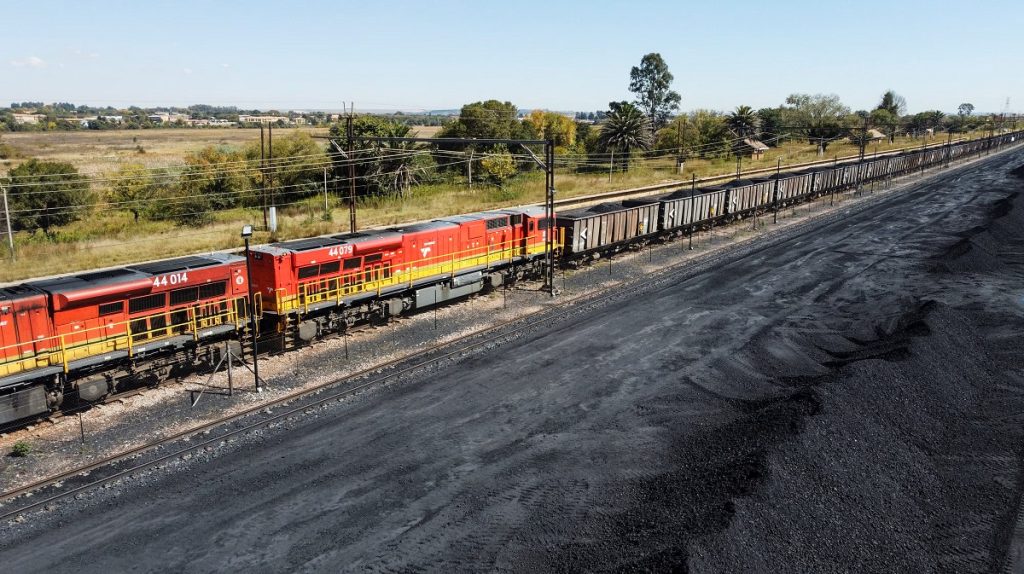
Industry projections indicate that systemic rail infrastructure challenges, combined with global market pressures, continue to limit export capacity.
Mining Analyst at Modern Corporate Solutions, Peter Major, told Channel Africa on Wednesday that SA’s coal market is shaped by a complex web of domestic and international factors.
“Anybody who really understands the coal export market in SA knows that there are so many moving parts. You can have 90% of them running correctly, but that one part not running correctly can have big effects,” Major explained.
He noted that last year’s export volumes were already historically low, and 2025 is likely to mirror that performance. Falling international coal prices, down more than 25% since last year, and a stronger rand have squeezed miners’ margins.
“A lot of coal miners who were making money at $100 coal can’t make money at $80 coal. And maybe they could make money when the rand was 19.5 to 1, but at 17 to 1, they’re losing money,” he said.
Major highlighted weakening demand from key markets. China, which can rapidly increase or cut imports, is currently prioritising domestic coal production to conserve foreign currency. India, which typically absorbs 70% to 80% of SA’s export coal, has also reduced its intake due to early monsoons disrupting logistics and reducing immediate demand.
“With such heavy dependence on India, any reduction in their demand leaves us with excess coal and limited alternatives. We used to sell a lot more to Europe, but now we sell hardly anything,” he added.
On the logistical side, persistent disruptions on Transnet’s rail corridors continue to prevent miners from maximising exports. Although Transnet has reported progress in reducing vandalism and theft on some routes, new bottlenecks have emerged elsewhere.
“They’ve had problems in Limpopo, where many of our major mines are located,” Major noted. “You really need strong infrastructure to move coal from the Waterberg all the way to Richards Bay.”
He argued that while Transnet has made some gains, they remain inconsistent and insufficient to raise export volumes. Allowing private sector participation in key rail corridors, he suggested, could significantly improve efficiency.
“When the producers of the coal are the same people who sell the coal overseas, giving them more control over logistics makes for a more efficient enterprise. If privatising parts of Transnet, especially the Saldanha and Richards Bay lines, helps get exports back to 75 or 80 million tons instead of 55 million tons, it will benefit the whole country,” he said.
Major stressed that SA must benchmark its logistics system against global standards to remain competitive. “We need to take care of ourselves. The sooner we make the necessary changes, the better.”
–ChannelAfrica–


