
The plan is a sweeping $126 billion investment programme aimed at ending load shedding, achieving energy security and positioning electricity as the backbone of SA’s economic recovery and industrialisation.
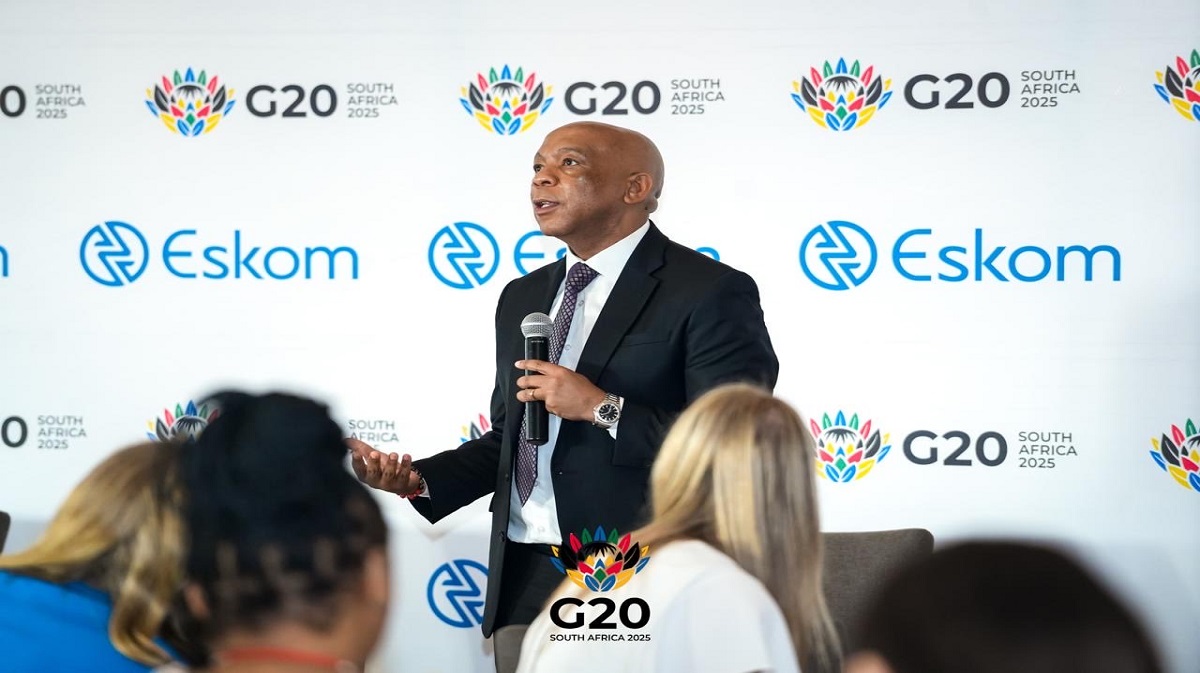
Speaking at a media briefing in Pretoria, Ramokgopa described the IRP as “the single biggest investment programme of a post-apartheid government”, underscoring its significance for growth, jobs, and environmental sustainability. He said the plan marked a decisive shift from crisis management to long-term planning and growth.
“We have turned the corner on load shedding,” he declared. “Energy now ceases to be a crisis. It becomes a catalyst for growth, for jobs, for industrialisation, and for the decarbonisation of our economy.”
The IRP 2025 sets out a comprehensive roadmap for SA’s electricity generation mix up to 2039, adding 105 gigawatts of new capacity, the equivalent of rebuilding Eskom’s generation fleet two and a half times over. It will guide investments in solar, wind, gas, nuclear, storage, and cleaner coal technologies, ensuring that energy supply keeps pace with population and economic growth.
By 2030, SA plans to add more than 29 000 megawatts of new capacity to the grid, including 11 270MW of solar PV, 7 340MW of wind, 6 000MW of gas-to-power, 3 100MW of storage, and 5 400MW from distributed generation.
Coal, long the backbone of SA’s energy system, will see its share fall from 58% of total capacity to 27% by 2039, as renewable sources become dominant. Solar and wind will collectively contribute over 40% of generation, while nuclear will grow from 2% to 5% with the planned addition of 5 200MW in new capacity.
Ramokgopa said for the first time in SA’s history, cleaner energy sources such as hydro, nuclear, solar, and wind will surpass coal as the main producers of electricity.
“We are pivoting away from a high-emission energy economy toward a cleaner, more sustainable one,” he said, but stressed that “SA does not have a coal problem, it has an emissions problem.”
Ramokgopa said the IRP’s first priority is to ensure SA never again faces power shortages. Load shedding, he noted, had been “a structural constraint” on the economy, limiting growth, raising unemployment and deepening poverty.
“The inability of our electricity system to meet demand has crippled economic growth,” he said. “No country can grow when the lights are off. This plan ensures that electricity will no longer be a constraint but a driver of development.”
Ramokgopa highlighted that Eskom’s energy availability factor (EAF), the proportion of its generation capacity that is operational, had averaged above 70% over the past month, a sharp improvement from below 50% during the height of the crisis in 2023.
“This marks a major turnaround,” he said. “It is the first time in years that we’ve had a consistent EAF above 70%. It means the system is stabilising, and that gives us the confidence to plan for growth rather than crisis management.”
The IRP 2025 represents a $126 billion investment programme, roughly 30% of SA’s GDP, which government expects will stimulate industrialisation, create jobs, and revive the domestic manufacturing and construction sectors.
Ramokgopa said implementation would depend heavily on rebuilding SA’s industrial capacity and technical skills base. “Our biggest risk is the shortage of skills and the weakened construction industry,” he said. “We have not built large infrastructure projects in years. We went from five major construction firms to just one.”
To address this, government will partner with universities, TVET colleges and industry to produce engineers, artisans and technicians. The plan also calls for a nuclear industrialisation programme to rebuild expertise lost after the Pebble Bed Modular Reactor project was mothballed.
“We must ensure our universities and technical institutions are ready to supply the engineers and technicians needed to build the future,” he said. “This plan is not just about electricity, it’s about rebuilding SA’s industrial capability.”
Ramokgopa said the financing of the IRP had already attracted interest from major international financial institutions, including 14 of the world’s top financiers who have pledged support for nuclear and renewable projects.
Ramokgopa said the plan would not only guarantee stable electricity but would also make energy more affordable and accessible to all South Africans. “Electricity must be available, reliable and affordable, for households, for businesses, for industries. That’s how we grow our economy and reduce poverty,” he said.
Ramokgopa emphasised that the IRP 2025 is a “living plan”, allowing for periodic updates as technology and market conditions evolve. Green hydrogen, for example, has not been incorporated due to current cost uncertainties, but will be added in future revisions once commercial viability improves.
“We are not rigid. As science advances and costs come down, new technologies will be incorporated,” he explained.
By 2039, emissions from SA’s electricity sector are expected to decline from 168 million tonnes of CO₂ equivalent in 2030 to about 142 million tonnes by 2035, supporting the country’s commitments under the Paris Agreement.
Ramokgopa said the IRP would not only secure SA’s energy future but also help meet climate and development goals. “We are building a future for posterity, a SA that is cleaner, industrialised, and inclusive,” he said.
He concluded by reaffirming government’s resolve to end the country’s long-running energy instability, “Electricity must never again be a constraint to SA’s growth. It must be the engine that powers our economy, creates jobs, and improves lives. That is what this plan delivers.”
–ChannelAfrica–





