

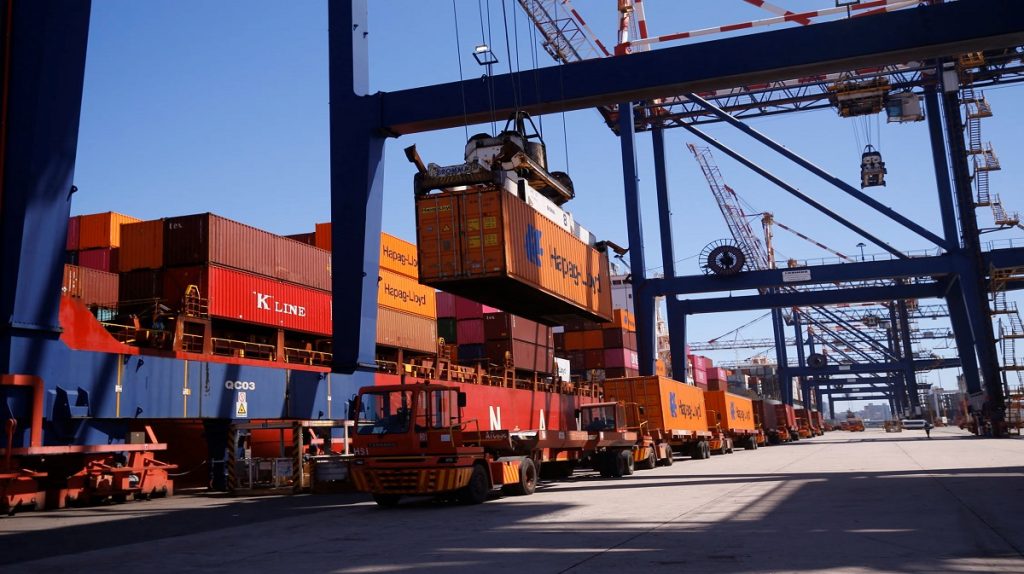
The development is expected to bolster the global competitiveness of SA exports as the country accelerates efforts to diversify its trading partners and strengthen trade‑led economic growth.
Trade Analyst Viwe Ntshongwana, speaking to Channel Africa, said the significance of the agreement must be understood against shifting global trade dynamics. She noted that recent years, particularly since Donald Trump assumed the United States Presidency, have been marked by heightened geopolitical uncertainty, prompting countries such as SA to seek more reliable and less politically conditional trade avenues.
According to Ntshongwana, the deal’s immediate benefit lies in duty‑free access for SA goods entering China. The removal of tariffs is expected to make South African commodities more affordable and attractive to Chinese importers, thereby increasing demand for the country’s exports.
Ntshongwana highlighted that SA’s mineral and agricultural sectors stand to gain the most from the duty‑free arrangement, with the motor manufacturing industry also likely to benefit to some extent. She compared the agreement to the preferential access SA enjoys under the US’ African Growth and Opportunity Act (AGOA), noting that similar categories of goods, particularly agriculture and minerals, would now enjoy improved entry into China’s vast market.
SA currently runs a trade deficit with China, driven largely by imports of manufactured and capital goods, while its exports to China are predominantly primary or consumption goods. Ntshongwana believes the new agreement could help narrow this deficit, given China’s large population and its corresponding capacity to absorb greater volumes of SA agricultural and mineral products.
Asked whether the agreement might complicate relations with the US, especially in light of the recent confirmation of AGOA’s renewal by Trump, Ntshongwana argued that SA has little choice but to continue diversifying its trade partnerships. She criticised the US for behaving as an “unreliable trading partner,” noting that AGOA has often been leveraged for political pressure. In her view, SA’s pivot toward broader global engagement enhances its negotiating position with Washington.
China’s agreement with SA follows a similar duty‑free arrangement signed with Kenya. Ntshongwana expects more African countries to follow suit, characterising China’s trade offers as “sweet deals”, combining affordability with fewer political conditions than those attached to Western trade frameworks.
She added that China is positioning itself as an attractive long‑term trading partner at a time when global markets are becoming more volatile. In contrast, the increasing politicisation of trade under the Trump administration has pushed many countries, not just in Africa, to seek stability by reducing their reliance on the US.
Ntshongwana believes the coming years will likely see a rise in China–Africa trade agreements as countries pursue economic relationships that are both predictable and mutually advantageous.
–ChannelAfrica–


