


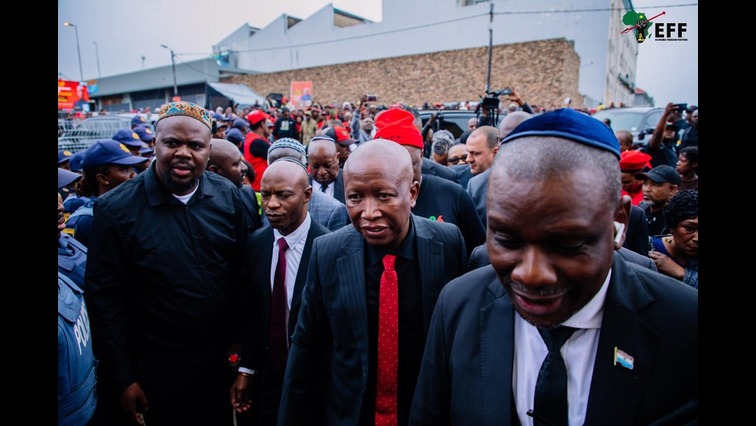
Julius Malema, a polarizing figure in South African (SA) politics, faces an uncertain political future after being sentenced to five years prison on Thursday following his conviction for firing an assault rifle in public during a 2018 rally.
Malema, founder and leader of the far-left Economic Freedom Fighters (EFF) party, built his platform around advocating for the rights of South Africans who feel left out of the country’s post-apartheid prosperity.
He has rattled investors with calls to nationalise mines and retake land by force, but his cry for economic justice in one of the world’s most unequal nations attracts millions of Black youths, many of them educated but facing a bleak future in a country where one in three people are jobless.
Malema, 45, was arraigned for firing a gun into the air during his party’s fifth birthday in 2018 in Eastern Cape province, in violation of the Firearms Control Act.
He had pleaded not guilty, arguing the gun was a toy, and his lawyers appealed the sentence on Thursday.
His party calls the case a “witch hunt.”
If upheld, the sentence would disqualify Malema from serving as a member of parliament casting doubt on his ability to retain his enduring influence on South Africa’s political landscape. His EFF is the fourth-biggest party, with roughly 10% of seats in the lower house of parliament.
“For him now, it might just be the end of the road,” independent Political Analyst Ralph Mathekga said. “The party had no plan regarding succession … (It is) difficult to imagine the EFF without Malema.”
Nicknamed “Juju” by his supporters, Malema was youth leader of the ruling African National Congress.
Malema’s refusal to stop singing “Kill the Boer (farmer)” – an apartheid-era resistance song – has been interpreted in far-right chat rooms and by United States President Donald Trump as a call to murder white farmers, who own most of the land due to a history of seizures by colonial then white minority rulers.
Critics have accused Malema , a self-declared Marxist of hypocrisy, saying his opulent lifestyle, including luxury cars and homes, clashes with his anti-elite messaging.
Malema’s frequent response is that he does not need to be poor to champion the poor’s cause. In January, in an address to his party faithful, he said: “Being a revolutionary is about the content of your mind and not what clothes you wear or what cars you drive.”
Malema has also faced allegations of corruption, which he denies. In 2015, a court threw out money laundering charges against him relating to government contracts.
–Reuters–


