

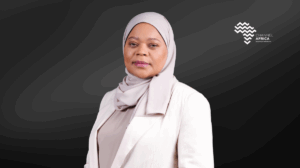
Deputy Minister in the Presidency Nonceba Mhlauli told an anniversary event at Isibalo House in Pretoria that official statistics were part of SA’s democratic infrastructure. “Statistics, at their very best, are not numbers. They are people, counted,” Mhlauli said.
Mhlauli paid tribute to Stats SA employees who built an inclusive national statistical system after apartheid-era censuses excluded many township and rural communities.
Census 1996 required new infrastructure, equipment and trained enumerators capable of reaching communities that had reasons to distrust government officials.
Subsequent censuses introduced increasingly advanced systems. Census 2001 processed more than 1 million questionnaire pages, while Census 2011 expanded the use of digital geographic information.
Census 2022 was conducted during the COVID-19 pandemic and periods of community unrest but counted 62 million people. “The data you produce enables the government to see where schools, clinics and essential services are needed,” Mhlauli said.
“You make evidence-based planning not just possible, but credible.”
Mhlauli said public participation was essential because census information helped determine how national revenue was distributed and guided decisions on healthcare, education, electricity and other services.
However, participation has become more difficult because of privacy concerns, public distrust and restricted access to gated estates, apartment buildings and other residential areas. “Public trust must be earned continuously, not only in the census year,” Mhlauli said.
Mhlauli called for sustained communication in all official languages and stronger partnerships with traditional leaders, faith communities, councillors and residents’ associations.
Stats SA should also demonstrate how information collected from communities influenced government decisions.
Mhlauli said rising census costs should not be used to justify reducing the scale or quality of future counts. “The census is not a cost. It is an investment,” Mhlauli said.
“Public money spent on a wrong population estimate is money spent in the wrong places.”
Mhlauli called for shared digital platforms, regional data standards and joint methodological investment as Southern African countries prepare for the 2030 census round.
SA has already begun developing Census 2031.
“Open the door. Take part,” Mhlauli said. “Your answers are not merely data. They are your voice in the planning of your country’s future.”
–ChannelAfrica–


