


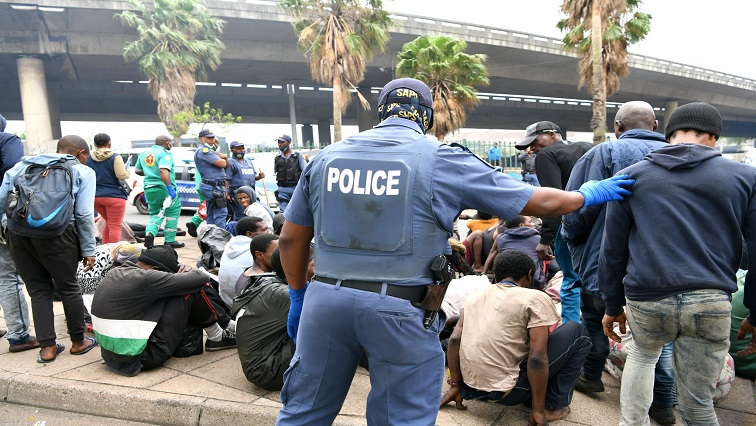
Speaking to Channel Africa on Monday, Bond argued that recent tensions involving foreign nationals reflect broader economic and social challenges, including unemployment, housing shortages and unequal development across Southern Africa.
Bond said hostility towards migrants must be understood within the context of what South Africa experienced during previous outbreaks of xenophobic violence, particularly in 2008.
“Economic pressures are bearing down and you get a rise of xenophobia and particularly here, Afrophobia,” Bond said.
Bond criticised political parties and movements that have mobilised around anti-immigrant sentiment, arguing that such approaches oversimplify complex problems. According to Bond, public debate often focuses on blaming migrants rather than addressing structural issues in labour markets, housing, public services and regional economic development.
Bond said class dynamics and state capacity are frequently overlooked in migration discussions. While condemning xenophobia, Bond argued that moral appeals alone are insufficient to address the frustrations experienced by poor and working-class communities.
According to Bond, SA’s unemployment crisis, estimated at around 44% when including discouraged job seekers, has intensified competition for work and housing. Bond also accused some employers of exploiting migrant labour by hiring workers with fewer protections and lower bargaining power.
Bond traced current migration patterns to historical factors, including colonial-era borders, migrant labour systems and economic policies imposed across the region. Bond also warned that climate change could increase migration pressures in the future, citing the growing impact of cyclones and droughts in countries such as Zimbabwe, Malawi and Mozambique.
Bond argued that SA’s economic influence in the region has sometimes contributed to instability and underdevelopment. Bond pointed to mining activities and fossil fuel projects as examples of economic practices that can deepen inequality and displacement.
On claims that a “third force” may be driving anti-immigrant sentiment, Bond said there is currently little evidence to support such assertions. Instead, Bond highlighted the role of social media, political rhetoric and local grievances in fuelling tensions.
Bond called for stronger intervention from government institutions, including the SA Human Rights Commission, and urged political parties to adopt a code of conduct against hate speech targeting migrants.
Bond also praised civil society organisations and faith groups that have supported refugees and asylum seekers, saying a stronger Pan-African approach is needed to address migration challenges across the continent.
–ChannelAfrica–


