
The International Organisation for Migration (IOM) is trying to move additional shelter materials into Gaza, but funding shortages, disrupted shipping routes and restrictions on durable construction supplies are limiting preparations. “We know that the rains have already begun and that the volume of goods that we have to get into Gaza is not going to meet the demands of the population,” IOM Regional Crisis Coordinator for Gaza Karl Baker said.
Baker said between 1.8 million and 1.9 million people required some form of shelter support.
An intensifying El Niño weather pattern could bring further rain during the coming months, increasing flood risks at displacement sites.
Gaza Resident Ahmed Al-Omari and other residents are filling discarded flour sacks with sand to build barriers around makeshift shelters. “We flood every year, and we have put these sacks in place in the hope that, somehow, rainwater will not get inside,” Al-Omari said.
Regional conflict has disrupted trade routes used to transport supplies from China, India and Pakistan through Jordan, Egypt and Israel.
Temporary tents in Gaza typically last about six months. Repeated displacement also damages shelters or forces families to abandon them. “Constantly moving a tent or a temporary structure has caused a lack of quality for what is currently inside Gaza,” Baker said.
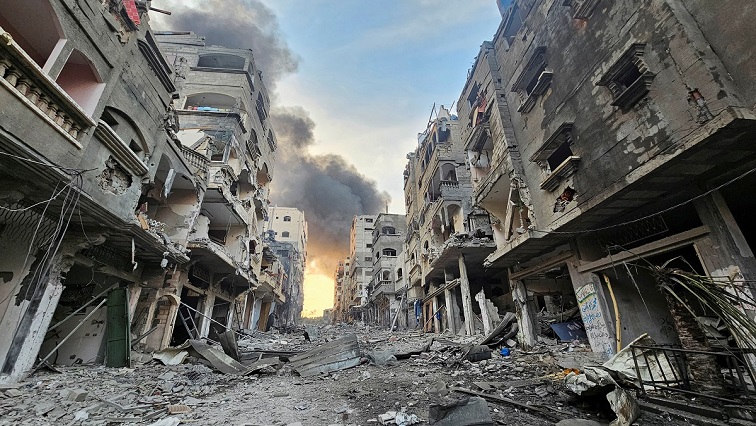
More than 4 000 buildings housing thousands of people are reportedly at risk of collapse.
Acting United Nations (UN) Special Coordinator for the Middle East Peace Process Ramiz Alakbarov said the UN was working with communities to evacuate unsafe buildings.
However, many families faced a choice between remaining in unstable structures or moving into tents offering limited protection.
Only about 30% of Gaza is accessible to most residents, reducing the availability of safer areas for displaced families.
In Khan Younis, Mohammed Barhoum and family members are using metal rods recovered from rubble to reinforce a tent. “Every year during the winter, this area floods because of heavy rainfall,” Barhoum said.
Many durable materials normally used during humanitarian emergencies, including roofing sheets and cement, remain restricted under Israel’s dual-use controls. “From our perspective, we must continue to advocate for more durable items to get in,” Baker said.
–UN/ChannelAfrica–