


The appeal comes amid growing concerns that increasingly sophisticated AI-driven weapons are being developed and deployed at a rapidly accelerating pace.
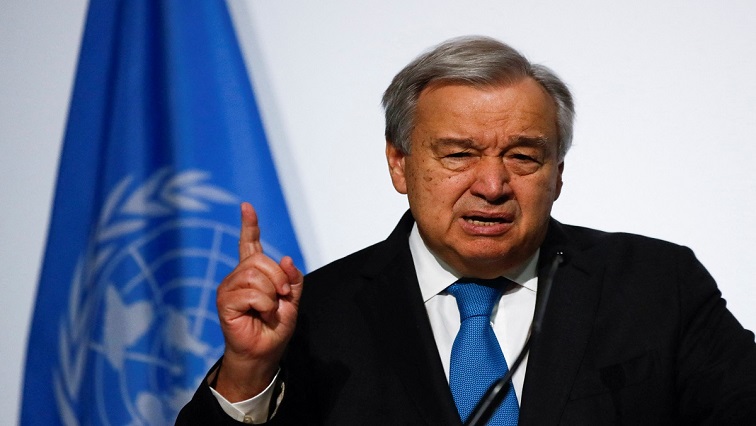
UN Secretary-General António Guterres warned that the international community is approaching a critical threshold. “We are now dangerously close to crossing a moral red line: the autonomous targeting of humans by machines,” Guterres said.
The concerns centre on weapons systems capable of independently identifying, selecting and engaging targets with little or no direct human intervention.
The UN and ICRC argue that such systems raise serious legal, ethical and humanitarian concerns, particularly in conflict zones where distinguishing between combatants and civilians is often complex.
President of the International Committee of the Red Cross Mirjana Spoljaric Egger joined Guterres in urging governments to act before autonomous weapons become more widely deployed.
In Geneva, Director of the United Nations Office for Disarmament Affairs at UN Geneva Mélanie Régimbal reiterated the UN’s position that machines should never be allowed to decide independently whether a human being lives or dies.
Régimbal said weapons that select and engage targets without human judgement are “politically unacceptable, morally repugnant and should be prohibited under international law”.
ICRC Legal Adviser Laurent Gisel warned that battlefields are highly unpredictable environments where circumstances can change within seconds. “A combatant can surrender or be wounded and therefore be protected from attack; civilians can enter the area of operations of the autonomous weapons systems; the weapons may encounter a situation that would not have been anticipated,” Gisel said.
The UN and ICRC noted that concerns are no longer theoretical, arguing that the race towards greater military autonomy is already under way.
The organisations are now calling for negotiations on a legally binding international instrument that would prohibit certain autonomous weapons and place strict controls on others. “States must show political courage and move beyond incremental discussions towards decisive action,” Guterres and Spoljaric Egger said in a joint statement.
The renewed appeal comes ahead of the seventh Review Conference of the Convention on Certain Conventional Weapons, scheduled for November in Geneva.
The UN and ICRC described the conference as the clearest opportunity for governments to begin formal negotiations on global rules governing autonomous weapons.
The two organisations first issued a joint appeal in 2023, urging countries to negotiate a legally binding framework by 2026 to ensure meaningful human control remains central to decisions involving the use of lethal force.
“We urge States to seize this moment,” Guterres and Spoljaric Egger said.
“Innovation must serve humanity, not endanger it.”
–UN/ChannelAfrica–


