


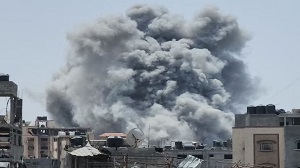
This includes people gathering firewood for cooking, appear to amount to direct attacks on civilians.
In a statement on Monday, the Office of the High Commissioner for Human Rights (OHCHR) in the Occupied Palestinian Territory said Israeli forces were “destroying Gaza City, forcing Palestinians to flee and then killing them when they seek shelter in Middle Gaza, especially in and around An Nuseirat Camp.”
Over the past five days, Israeli strikes on the north-western Middle Gaza governorate, covering An Nuseirat and Az Zawaida, killed at least 89 Palestinians, most of them women and children. At least 12 incidents were recorded, including bombardments of internally displaced persons tents, homes and a crowded market in An Nuseirat, where 17 people reportedly died.
OHCHR also documented repeated attacks on people collecting firewood after Israel blocked the entry of cooking gas in March 2025. Between August and late September, 14 such incidents were recorded, leaving 21 people dead, including a child. With fuel supplies cut, families have relied on wood salvaged from debris and broken furniture as their only source for cooking.
“The strikes which kill many Palestinians, including children and women, as well as the use of live ammunition against Palestinians collecting firewood, appear to amount to attacks directed at civilians, demonstrably not directly participating in hostilities,” OHCHR warned.
Meanwhile, the UN aid co-ordination office said air strikes have also hit high-rise buildings in Gaza City districts such as Ar Rimal, Beach camp and Tal al Hawa. Despite challenges, aid partners provided 658 000 meals on Sunday through bakeries and community kitchens, though access to northern Gaza remains highly restricted.
Daily food distributions in the north have fallen sharply from 170 000 meals in mid-September to about 50 000. Nearly 453 000 displacements have been recorded since mid-August, with most originating from Gaza City, according to UN figures.
–UN/ChannelAfrica–


