

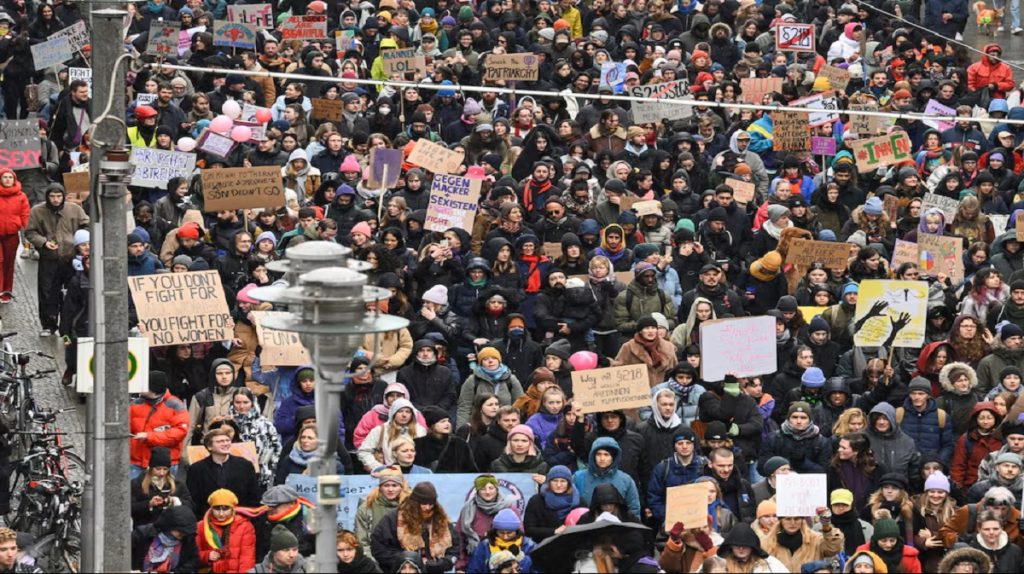
The agenda is a global framework recognising women’s vital role in preventing and resolving conflicts.
The resolution, adopted in 2000, called for the inclusion of women in peace negotiations, post-conflict reconstruction, and security policymaking.
Speaking to UN News on Friday, Laura Flores, Americas Division Director at the Department of Political and Peacebuilding Affairs, described the resolution as “a real game-changer.”
“People finally started recognising that women aren’t just affected by conflict, they’re also key to resolving it,” Flores said. “It’s about making sure women have a seat at the table when peace is being negotiated, and that their voices are heard in decisions that shape recovery and security.”
According to the UN Secretary-General’s latest report, nearly 700 million women lived within 50 kilometres of deadly conflict last year. Sexual violence has increased by 87% over the past two years, while nine out of ten peace processes still exclude women negotiators.
However, the 25th anniversary also highlights notable progress, especially in the Americas, where women now hold record levels of parliamentary representation, averaging 41% in the Caribbean, 31.9% in South America, and 30.8% in Central America. Countries such as Mexico, Chile, and Colombia have also adopted foreign policies that promote gender equality in diplomacy and peacebuilding.
Despite these advances, Ms Flores warned that gender-based violence in the region remains alarmingly high, with at least 11 women murdered every day in Latin America. Political violence and digital harassment targeting women leaders are also on the rise.
In recent years, the UN has worked with several countries in the region to implement the Women, Peace and Security framework. In Chile, a presidential commission, supported by the UN, addressed conflicts affecting Indigenous communities, with Mapuche women contributing many of the proposals. In Colombia, the UN helped develop the country’s first national action plan aligned with Resolution 1325.
Flores emphasised that sustaining progress will require “protection, investment, and political will,” adding that while the region has momentum, continued international and local commitment is essential to achieving lasting gender equality in peace and security efforts.
–UN/ChannelAfrica–


